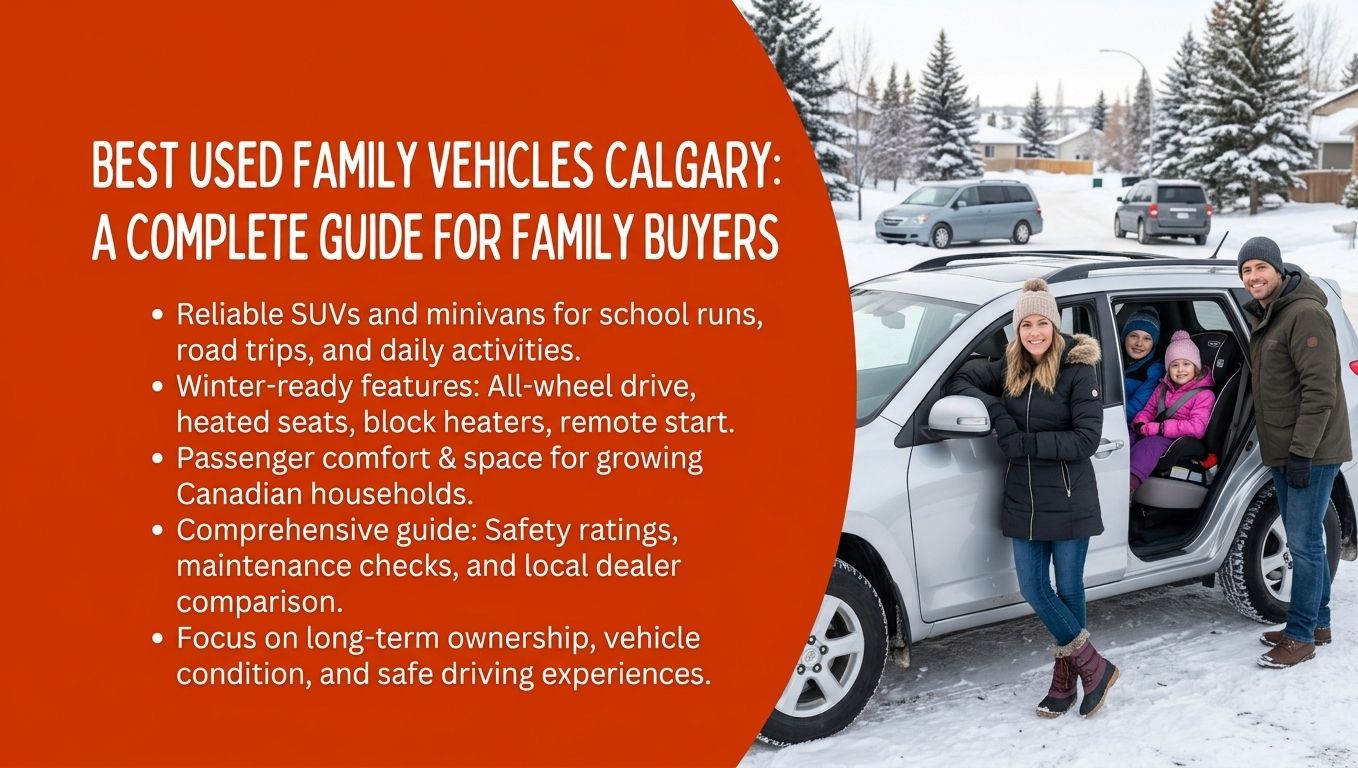
Best Used Family Vehicles Calgary: A Complete Guide for Family Buyers
Choosing the right vehicle matters, as parents need one they can depend on for school drop-offs and pickups, road trips, and other day-to-day...
Read more
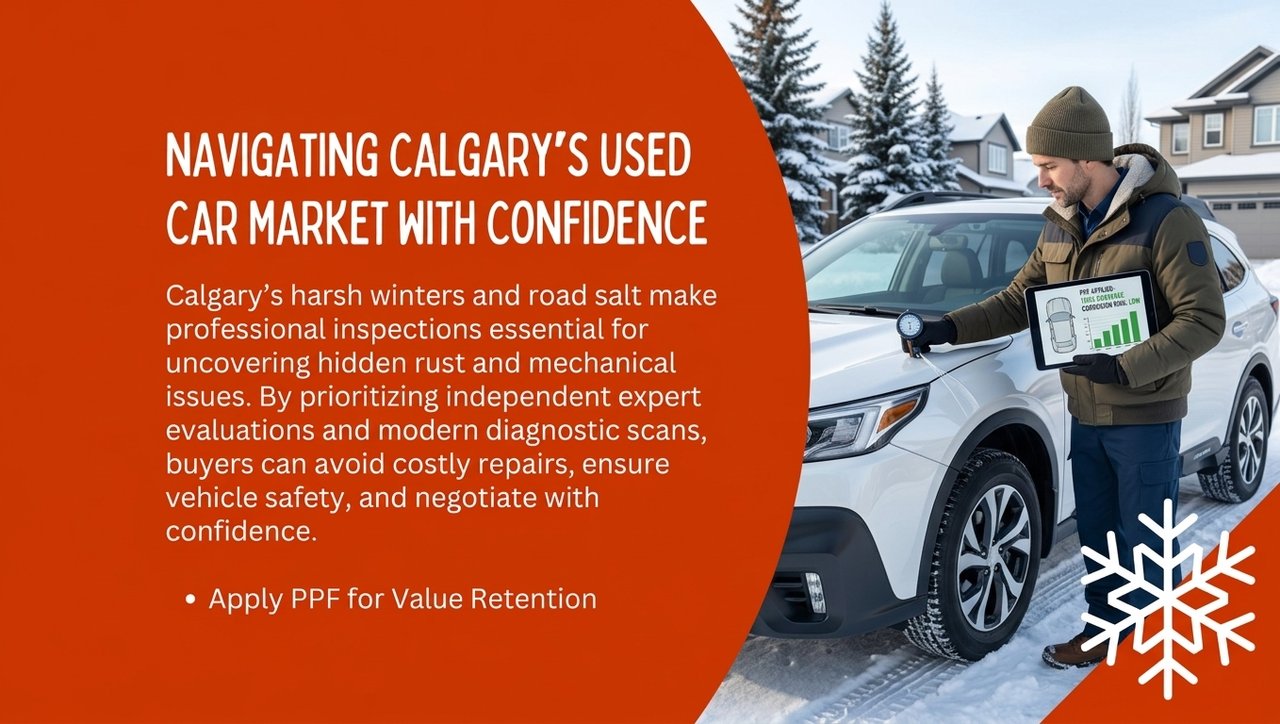
Owners of new and used vehicles can take steps to slow depreciation and protect their investment when it is time to trade in their vehicle for another model. The following guide explains how to minimize depreciation and maintain resale value.
Vehicle depreciation refers to the reduction in market value as a vehicle ages and accrues mileage. Depreciation does not occur at a flat rate; it usually happens at a diminishing rate, with most of the depreciation occurring in the first several years of a vehicle's life. A vehicle's value is affected by several factors, including its condition, mileage, service history, manufacturer reputation and market demand. This matters for Calgary buyers, as the climate here and regional preferences affect resale value.
The sharpest depreciation occurs in the first year of a car's lifetime. A new vehicle's value is essentially reclassified as pre-owned the instant you purchase and register it, and this typically results in a loss of about 20% to 30% of its initial value for most vehicles nationwide in that period. For many cars, depreciation tends to level off after a few years, and many lose about 12% to 15% of their resale value each year between the second and fifth years, resulting in a loss of around 58% to 65% of the purchase price by Year 5. This partly explains why some Calgary car buyers prefer buying a pre-owned vehicle a few years old.
Vehicle age and kilometres driven are two of the strongest indicators of a vehicle's value. As a vehicle ages, it may be considered worth less because its parts have been used more, warranties expire, and maintenance requires more attention. And vehicles with higher kilometre readings may be a more significant risk for buyers in terms of mechanical reliability and repair costs down the road. When buying a used car in Calgary, Calgary buyers should consider service history, mechanical condition, and reliability to avoid making a mistake.
Business vehicle owners may also claim depreciation through Capital Cost Allowance (CCA), as administered by the Canada Revenue Agency. Depending on class and tax status, there can be a variety of CCA classes and rates that can be applied to your particular vehicle. The tax depreciation value of a CCA calculation is not necessarily representative of the real depreciation (the selling price) of the vehicle on the market.
Another key factor affecting the Calgary auto market is the city's economy. With Calgary being a hub of Canada's energy sector, the local economy can be quite sensitive, and economic strength can impact everything from consumer spending habits to new and used vehicle sales. When the economy is doing well, demand for trucks, luxury models, and AWD crossovers can be higher than in other areas. When the economy lags, cost-saving decisions to downsize fleets can lead to a higher volume of off-lease vehicles flooding the pre-owned market.
Winter road treatments can result in external damage and long-term defects. Road crews often spread a sand-and-gravel mix on primary roads, including Deerfoot Trail and Stoney Trail. While driving on the highway, these materials can strike vehicles and cause paint chips, scratches, and windshield damage. Over time, the damage becomes more visible, especially on vehicles with minimal or compromised paint protection, which can affect used-vehicle resale values, as consumers tend to lean toward vehicles with good bodywork and factory finishes.
The Chinook weather of Calgary leads to constant freeze and thaw, resulting in vehicles being repeatedly exposed to moisture, road salt, and chemical de-icers. When the weather warms, snow and ice melt, releasing moisture and road debris into streams beneath the vehicle, where they can contact metal parts susceptible to rust and corrosion, especially in underbody seams and suspension areas. Underbody cleaning and corrosion protection are effective ways to minimize the risk of rust.
Some vehicles sought by Calgary drivers also reflect different tastes than other marketplaces in Canada, where buyers look for practical, multi-purpose vehicles that perform well in the winter months. Four-wheel-drive pickup trucks and all-wheel-drive crossovers are popular here because they're well-suited to winter driving, rural living, and recreation.
Alberta residents often need the towing capacity, versatility, and ability to handle various driving conditions that full-sized four-wheel-drive pickup trucks like the Ford F-150 and RAM 1500 offer. Full-size pickup trucks have many uses beyond transportation. This makes them appealing to both private buyers and business owners, provided regional demand is robust.
All-wheel-drive crossovers like the Toyota RAV4 or Subaru Outback attract Calgary drivers because they offer a comfortable ride, ample cargo room, and all-weather winter driving performance. The same flexibility that makes a Toyota RAV4 or Subaru Outback desirable for commuting, running around the city, family hauling, or going on vacation can also help these AWD vehicles hold their value better than comparable front-wheel-drive vehicles. That said, a vehicle's resale value ultimately depends on condition, mileage, accidents, and maintenance.
Demand for used electric vehicles is affected by evolving battery technology, charging infrastructure, and advances in new model vehicles. Extreme Calgary winter temperatures can temporarily reduce an electric vehicle's range, increasing energy use for cabin heating and battery maintenance. At the same time, advances in battery technology and newer vehicles may cause used batteries or older vehicles to decline in value. Hybrid electric vehicles could be a good fit for buyers looking for lower fuel use, without relying solely on electric range.
Although there isn't any relative value penalty for passing 50,000 km, it can affect buyer expectations when purchasing a used vehicle, as certain factory bumper-to-bumper warranties are nearing expiry. Buyers may become more concerned with a car's servicing history, mechanical condition, and possible repairs, which can influence how it is priced on sale.
Another important consideration, 100,000 km is a critical milestone for many used vehicle shoppers since most manufacturers have completed warranty periods at this stage and further scheduled maintenance may be due. Vehicle servicing requirements depend on make and model but may include spark plugs, transmission servicing, coolant replacement, and other inspections at scheduled intervals. This can be factored into a price discussion if servicing has been proven through receipts and maintenance records.
Although some lenders impose age and mileage limits for financing used cars, vehicles over 160,000 km can deter a narrower range of potential buyers. This could impact how much a buyer can borrow to purchase that vehicle. As a result, you may find yourself competing with other sellers on price, condition, and service history, so it's important to provide a mechanically sound vehicle with comprehensive documentation.
Paint Protection Film (PPF) is a great way to safeguard your vehicle's exposed surfaces against gravel, road debris, and minor stone strikes. Calgary drivers who frequently drive on and off the freeway may consider PPF for the bumper, hood, side mirrors, and other sensitive areas. It maintains the vehicle's factory paint finish and enhances resale value. There are upfront costs with paint protection film, but it minimizes cosmetic damage from freeway driving.
Regular undercarriage washing is especially important in Calgary in winter, as road salts, sand, gravel, and chemical de-icing agents get all around the vehicle's underbody. They can also build up and lead to rust and corrosion if they are not cleaned regularly. That is why it is necessary to wash the underbody during the winter to remove these elements from exposed metal parts and keep it in good condition.
A folder containing receipts for oil changes, mechanical repairs, inspections, and tire replacements prove that proper maintenance is being carried out. A record like this can also reassure potential buyers by showing what work has been done beforehand.
The Alberta Motor Vehicle Industry Council (AMVIC) oversees automotive industry standards in Alberta and enforces rules to help protect consumers. Providing accurate information about your vehicle, making necessary disclosures, and creating a transaction record provide the transparency needed to sell a vehicle. Vehicle owners should review the specific standards that apply to their transaction and not assume every private vehicle sale must have a registered dealership or mandatory inspection.
Findings from a Carfax Canada vehicle history report can show whether a reported accident was recorded, ownership history, and other records on file. A seller with an accurate and comprehensive vehicle history report can ensure that their vehicle presents well to shoppers.
Alberta imposes no general provincial sales tax, and the federal GST rate is 5%. If you trade in an eligible used vehicle at a GST-registered dealership against a new purchase of a replacement vehicle, the GST you pay on the sale of the replacement vehicle is usually offset by the trade-in value of the traded-in vehicle, which can be a significant saving, making it worthwhile to buy your vehicle from a dealership and trade it in rather than from a private seller. But compare the trade-in tax savings against the gains in a private sale before you decide.
For example, if a car buyer is paying $50,000 for a replacement vehicle and is given a $25,000 trade-in credit for their existing vehicle, GST is generally paid on the $25,000 difference. So while the buyer would be required to pay 5% GST on $25,000, only $1,250 would be payable, which works out to $1,250 saved. This is one reason Calgary vehicle owners should always consider the overall value of a dealership trade-in rather than simply looking at a private sale price.
Although private sales may attract higher returns, they take more time and involve advertising, negotiation, and coordinating with multiple buyers. Trading at the dealer is convenient and may save on GST if you are purchasing an eligible replacement vehicle. Weigh the financial benefits of each to see what works best.
Yes, if you are purchasing a new vehicle and the dealer accepts your old vehicle as part of the sale, you will use the trade-in allowance when determining the price of your new vehicle. GST applies to that difference, not the total price, which can save you money.
Owners can access Canadian Black Book values and compare them with similar vehicles advertised in the Calgary marketplace. The listing price can be based on the model year, trim level, mileage, accident history, maintenance history, and overall condition. Many sellers also compare the private sale price to the price they are offered as a trade-in from the dealership.
For most car owners, a vehicle is among the most significant investments they will ever make. A vehicle's value depends on a range of factors, ffrom its age, model year, and mileage to its mechanical condition, climate, and regional demand. For example, owning a vehicle in the winter conditions typical of Calgary benefits from repairs and maintenance. At the same time, four-wheel-drive trucks and all-wheel-drive crossovers have their own resale market.
Preserving resale value will involve continued control of ownership costs and vehicle condition. Many factors contribute to a vehicle's value, including paint protection, undercarriage washing, and rust-proofing, as well as maintaining a thorough service history and using dealer networks to sell or trade in your vehicle. Private sales, compared to trade-in at the dealership, and taking advantage of Alberta's GST rebate system can help you hold on to your vehicle's value as you upgrade to a new vehicle.
Best Used Family Vehicles Calgary: A Complete Guide for Family Buyers
Choosing the right vehicle matters, as parents need one they can depend on for school drop-offs and pickups, road trips, and other day-to-day...
Read more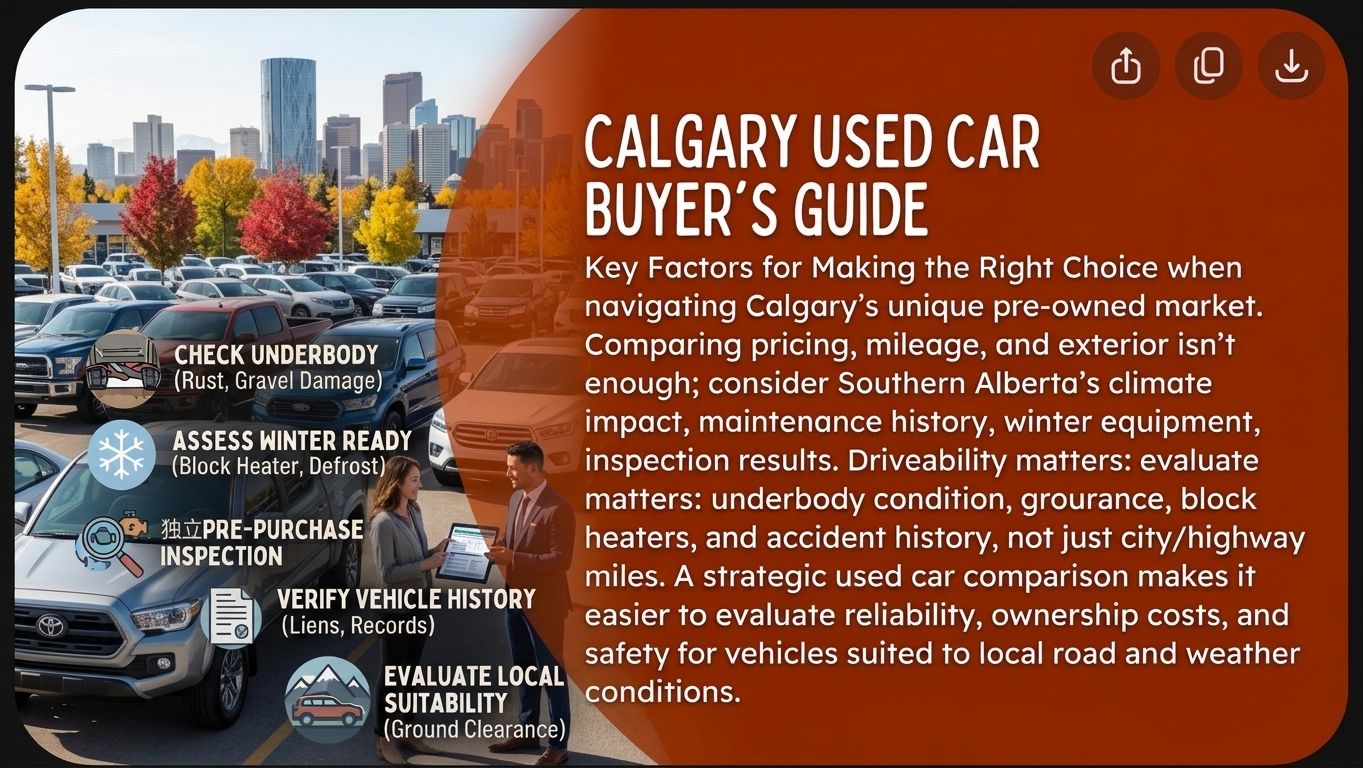
How to Compare Used Cars in Calgary: The Ultimate Pre-Owned Vehicle Guide
When buying a used car in Calgary, comparing pricing, mileage, and exterior condition isn't enough. Southern Alberta's climate exposes used...
Read more
Demystifying Pre-Owned Vehicle Mileage for Calgary Buyers
Demystifying Pre-Owned Vehicle Mileage for Calgary Buyers You’ve probably spent hours browsing local used-car listings, trying to find the right...
Read morePowered and developed by
