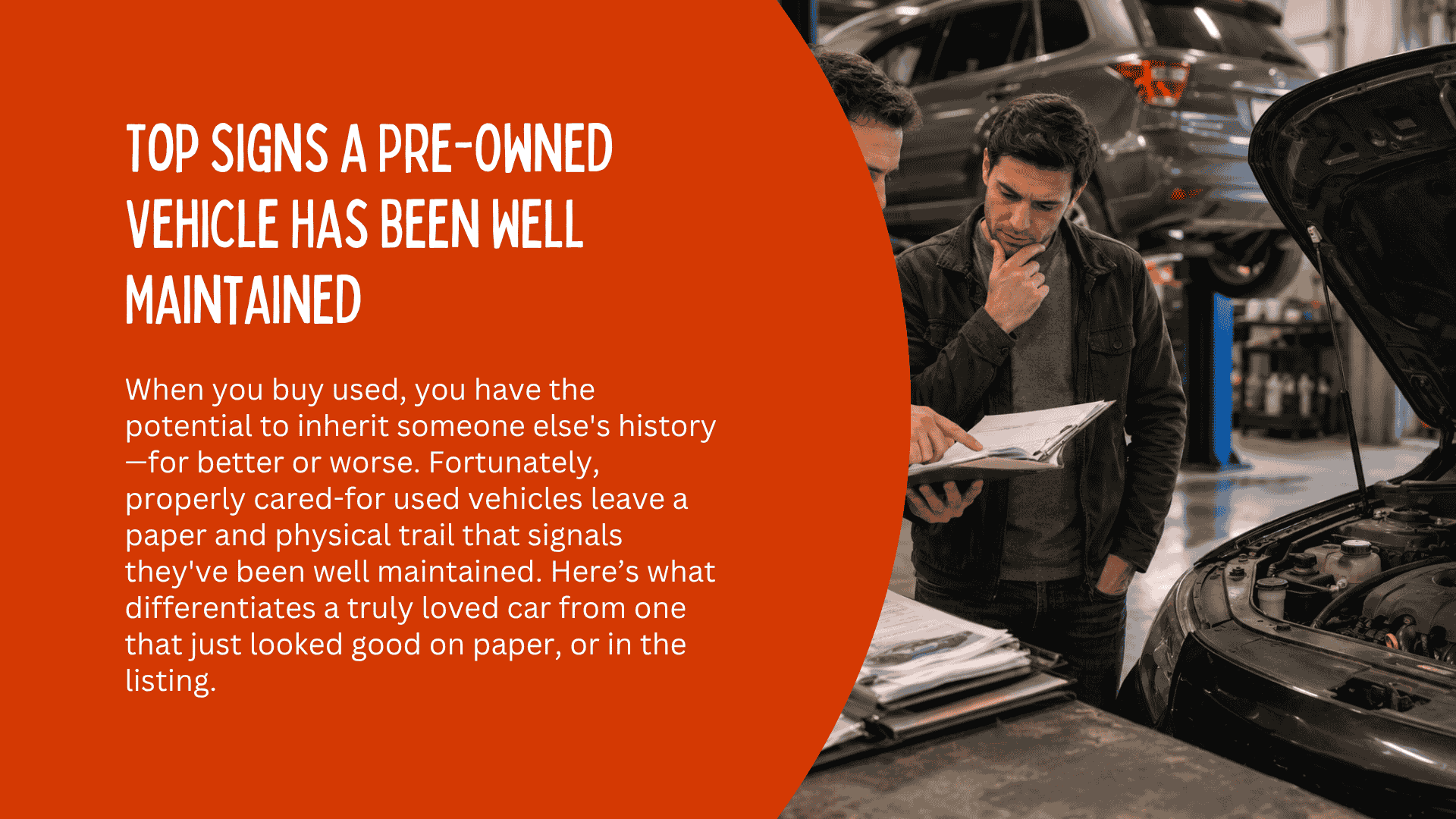
Top Signs a Pre-Owned Vehicle Has Been Well Maintained
Key Insights -The overall comprehensive maintenance record from a shop or single dealership would be preferable, showing evidence of proper car...
Read more
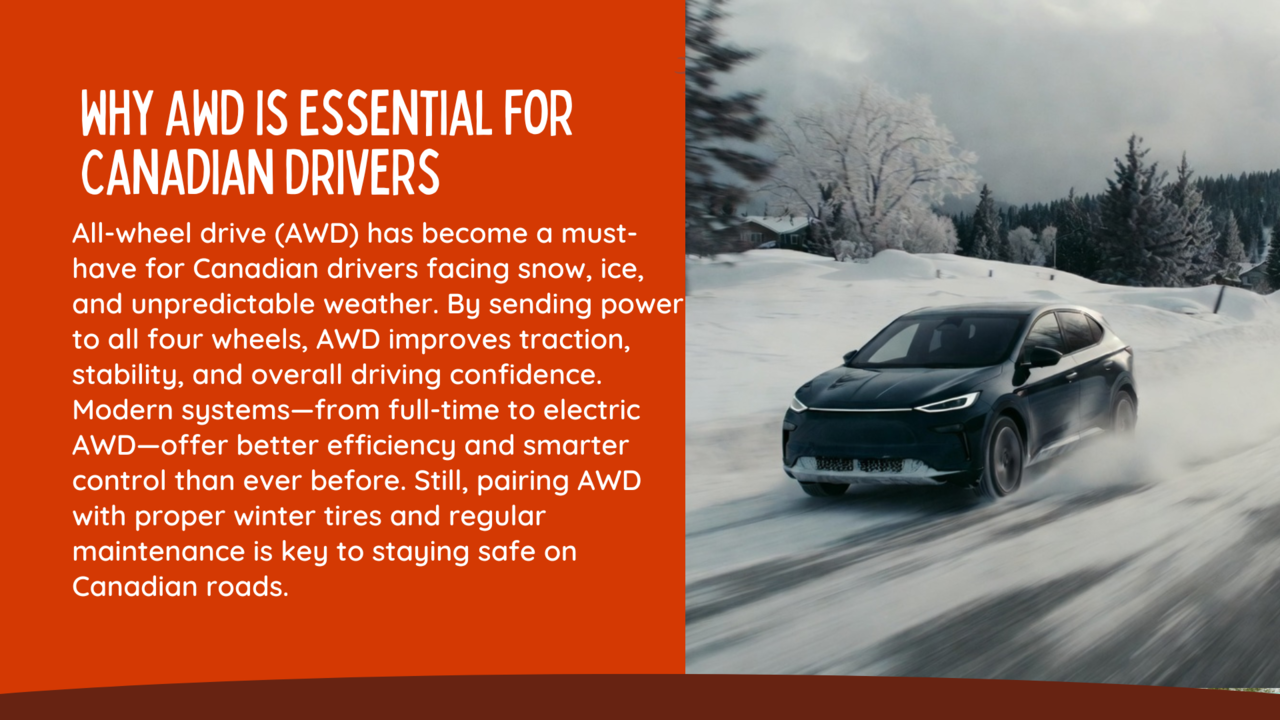
Imagine driving in the winter without fear but with confidence. The first step toward that transformation for Canadian drivers is all-wheel drive. All four wheels receive power and traction from AWD, giving you the solid base you need to safely navigate through ice, snow, and everything in between.
Look around any Canadian parking lot, and you’ll see a clear trend: AWD vehicles are everywhere. This isn't an accident. It is the direct response to what we value most: safety, reliability, and the ability to handle our unpredictable climate.
Gone are the days when all-wheel drive was only for trucks and specialty SUVs. Now you’ll find capable systems across every category.
Market data support this change. According to industry reports, light trucks and SUVs—nearly all of which have AWD—outsell conventional cars by a significant margin. This demands fules a strong secondary market, with used AWD vehicles retaining excellent value. Simply put, All Wheel Drive is now knitted into Canadian driving.
All four wheels are powered by all-wheel drive systems. The method varies, creating different driving experiences. Understanding the types helps you choose.
|
Full-Time AWD |
Part-Time (On-Demand) AWD |
Electric AWD (eAWD) |
|
|
|
For its immediate response, eAWD is moving toward standard adoption.
New technology predicts a slip before it happens by analyzing road data.
AWD increasingly works with other vehicle safety and control features.
These advancements create more capable and efficient vehicles for Canadian driving conditions.
AWD cars are not limited to the lot. The economic environment and general safety of Canada are all impacted.
AWD demand from consumers sustains a premium. For dealers and automakers, this boosts sales. It maintains jobs in sales and manufacturing across the country. Used AWD car sales are still quite robust. These vehicles continue to be valuable, resulting in a strong secondary market.
Fuel economy was often decreased by early AWD systems. These days, designs are more effective. On-demand systems disconnect when not in use. An innovative development is electric AWD or eAWD. Tailpipe emissions are zero in electric vehicles. Using Canada's cleaner electricity significantly lowers the long-term carbon footprint.
For many, safety is the primary reason for choosing AWD. The improved traction is invaluable on snow and ice. When wheels lose grip, others can maintain momentum. Electronic stability controls are used by the system to maintain the vehicle's intended course. Drivers feel more confident as a result. AWD does not take the place of winter tires. For total safety, both are required. Tires provide the stopping and steering control that AWD alone cannot.
Selecting the right all-wheel drive vehicle requires a strategic approach. Your specific needs should guide the decision.
Consider the places you drive the most. Frequent travel on rural or mountainous roads requires different conditions than driving in cities with sporadic snowfall. The required system strength is determined by your routines.
Choose between brand-new and pre-owned AWD cars. Weigh the need for off-road capability against your desire for fuel economy. A useful middle ground for everyday use is frequently offered by contemporary on-demand and eAWD systems.
Determine which type of AWD best suits your needs. Full-time systems allow for continuous participation. Part-time systems prioritize efficiency by only turning on when necessary. In hybrids and EVs, electric AWD provides instant precision.
Adhere to the transfer case and differential fluid service schedule supplied by the manufacturer. Neglect results in costly repairs. Give tire care top priority. To avoid stress on the drivetrain, all four tires must have comparable tread depth and identical specifications. Make tire rotations a regular practice. For crucial stopping and steering power, install winter-specific tires. Plan to have drivetrain components inspected on a regular basis. Take care of any warning lights right away.
AWD ownership has real challenges. Acknowledging them is key.
AWD models are more expensive initially. Because of their complexity, they may also have somewhat higher fuel and maintenance costs.
Tires must be matched closely in wear. Replacing one often means replacing all four. Winter tires are essential, but they add to your annual expenses.
The biggest risk is overconfidence. AWD improves acceleration but not braking or steering on ice. Safe driving and proper tires remain absolutely necessary.
AWD is now a necessary feature for drivers in Canada. It increases safety and confidence by providing the vital traction and stability needed for our diverse climate and terrain. This technology is still developing, with intelligent systems and electrification influencing its future.
In order to get the most out of AWD responsible ownership is required. This entails prioritizing maintenance and matching AWD with tires designed for the winter. Ultimately AWD is a powerful tool for improving Canadian roads by combining state-of-the-art engineering with practical requirements for safer travel in the future.
What are the main types of AWD vehicles?
Full-Time (constant power), Part-Time/On-Demand (activates when needed) and Electric AWD (eAWD), which is utilized in EVs and hybrids are the three main varieties.
Do I need winter tires with AWD vehicles?
True. Winter tires are necessary for safe steering and braking on ice and snow but AWD aids in acceleration.
Are AWD vehicles more expensive to maintain?
Typically, yes, due to more complex components like additional differentials and transfer cases that require specific service.
What is a common mistake for new AWD owners?
Using mismatched tires with different tread depths can damage the drivetrain. All four tires should be very similar.
What is the advantage of eAWD?
eAWD offers instant torque response and very precise electronic control for superior traction and handling, often with greater efficiency.
Top Signs a Pre-Owned Vehicle Has Been Well Maintained
Key Insights -The overall comprehensive maintenance record from a shop or single dealership would be preferable, showing evidence of proper car...
Read more
The Definitive Guide to Used Car Financing in Canada
Key Insights Work with your own bank or credit union to get a loan pre-approved, as that will give you an impressive bargaining chip against your...
Read more
How Trade-In Value Affects Your Next Pre-Owned Vehicle Purchaseac
How Trade-In Value Affects Your Next Pre-Owned Vehicle Purchaseac Trading in your current car is often the fastest way to lower the cost of your...
Read morePowered and developed by
