Top Signs a Pre-Owned Vehicle Has Been Well Maintained
Key Insights -The overall comprehensive maintenance record from a shop or single dealership would be preferable, showing evidence of proper car...
Read more
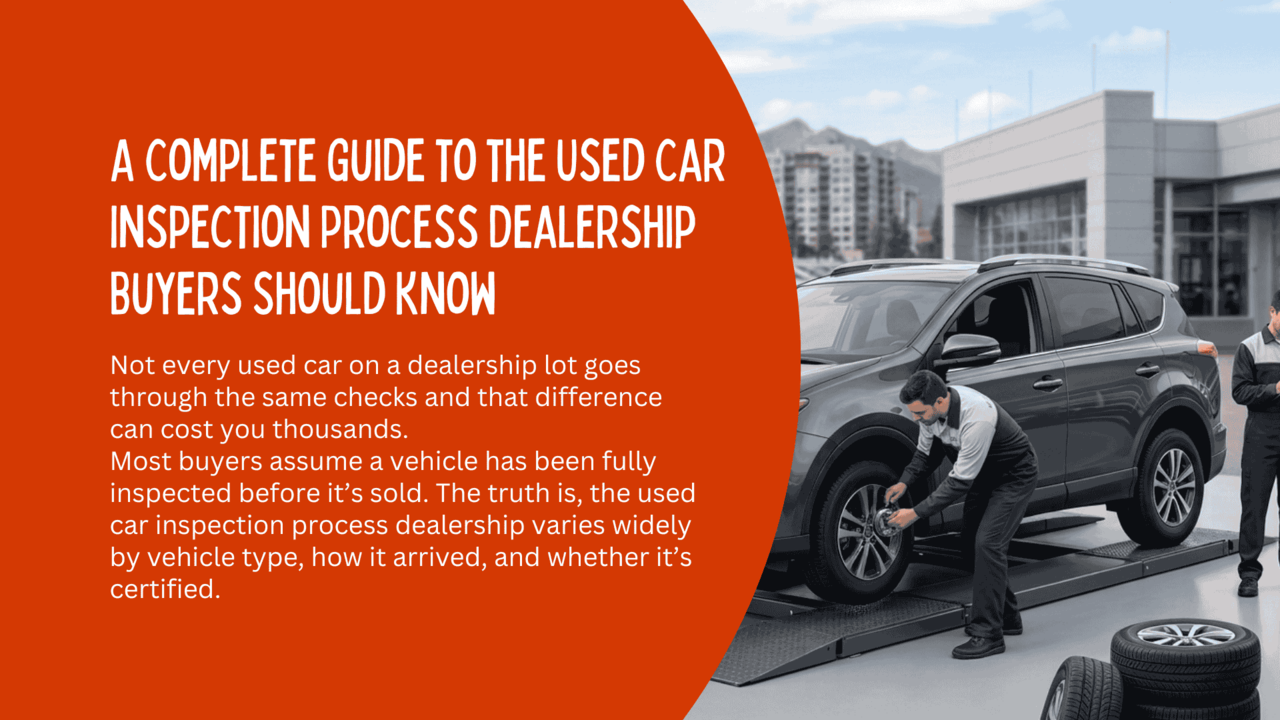
Not every used car on a dealership lot goes through the same checks and that difference can cost you thousands.
Most buyers assume a vehicle has been fully inspected before it’s sold. The truth is, the used car inspection process dealership varies widely by vehicle type, how it arrived, and whether it’s certified.
Understanding the car reconditioning process from mechanical safety checks to cosmetic fixes helps you ask the right questions before signing anything.
By the end of this article, you’ll know exactly what a proper inspection covers, what “certified” actually means in Canada, and how to protect yourself when it’s not there.
A standard dealership safety check covers mechanical condition, fluid levels, brakes, tires, lights, and a diagnostic scan — but the depth depends on whether the car is sold as-is or certified.
When a used vehicle arrives — through trade-in, auction, or direct purchase — a technician reviews the vehicle history report (CARFAX Canada or CarProof) and runs a visual assessment first.
From there, the car moves into a pre-sale inspection. This is where the real checks happen.
When a used vehicle arrives, a technician reviews the vehicle history report first. From there, the car moves into the core used car inspection process dealership service departments run before any vehicle is listed.
Why? A clean OBD scan is one of the most overlooked health indicators. It surfaces issues the eye never catches.
Pro Tip: Ask the dealership for the pre-sale inspection sheet before you test drive. Reputable dealers hand it over without hesitation.
Next, let's look at what separates a standard used car from a certified used car in Canada—and whether the label is worth trusting.
|
Want a checklist of questions to ask before buying? Visit our Used Car Buyer’s Guide for a free walkthrough of what to verify before you commit. |
In Canada, "certified pre-owned" is not a regulated term. Two dealerships can use the same badge for inspections that look nothing alike. Knowing the difference protects you.
Manufacturer-backed CPO programs like Toyota Certified or GM Certified follow standardized checklists of 100 to 172 inspection points. They also include extended warranties, making them the strongest buyer protection available. (Canadian Black Book, 2024)
Independent dealer-certified labels are more variable. Some mirror manufacturer standards closely. Others use “certified” loosely no third-party verification, no warranty backing.
Why? In Alberta, dealer liability under provincial consumer protection laws is generally reduced when vehicles are sold as-is. Your main defense is the inspection phase.
Understanding the label is only part of the picture. The vehicle certification standards applied during reconditioning tell the deeper story.
Reconditioning bridges the gap between a car arriving at the lot and being ready for sale — and it covers far more than a wash and a vacuum.
After the mechanical inspection, a vehicle enters the car reconditioning process. This phase addresses both safety repairs and cosmetic presentation.
Pro Tip: A car that smells strongly of air freshener at a dealership deserves a second look. Odor masking is common and sometimes signals water damage or mould underneath.
Once it clears both phases, the vehicle moves to a final used car quality control check before being listed for sale.
|
Browsing used inventory in Calgary? Autos House carries reconditioned vehicles with full inspection records available on request. Browse our current inventory to find your match. |
Used car quality control is the stage that confirms a vehicle is showroom-ready — and catches anything the earlier inspection missed.
After reconditioning, a second technician conducts a road test. This catches issues that only appear under real driving: transmission hesitation, brake pulling, vibration at highway speed.
The vehicle history report is then reviewed alongside the completed inspection sheet. Any discrepancies are flagged before the car is listed.
Why? Most buyers never ask for this paperwork. Dealers who recondition properly have no reason to withhold it. Hesitation is a signal.
There’s one more layer most buyers overlook — and it’s the gap where expensive surprises hide.
Even a thorough dealership safety check has limits — and knowing those limits is what separates a confident buyer from one who’s surprised six months later.
Standard pre-sale inspections typically skip full frame inspections for hidden structural damage. They may also miss intermittent electrical faults, issues that only surface in cold Alberta winters, or cosmetically concealed flood damage.
A 2023 report from the Automobile Protection Association (APA Canada) found a significant share of used vehicles sold in Canada had undisclosed prior damage — even with a history report on file.
Pro Tip: In Alberta, a salvage or rebuilt brand on a vehicle’s registration must be disclosed by law. Ask to see the actual registration — not just the history report summary.
Knowing how the used car inspection process works gives you a real edge — because most buyers walk in without asking any of these questions.
In Calgary’s used car market, trucks and SUVs move fast. That creates pressure to decide quickly. Come prepared with a short list of documents to request before you test drive.
Reputable dealerships expect these questions. If a dealer resists providing inspection records or declines a PPI, that answers your question about the car.
The used car inspection process dealership is your first layer of protection — but it’s not your only one. Knowing what a proper inspection covers, what certified really means in Canada, and what questions to ask puts you firmly in control.
The best-protected buyers don’t just trust the process — they verify it. Verify the inspection sheets, vehicle history reports, and an independent PPI before any money changes hands.
If you’re shopping for a used vehicle in Calgary and want full documentation on every car, Autos House Calgary has reconditioned inventory with inspection records available on request.
Book a no-pressure walkthrough today — bring your questions, and we’ll bring the paperwork.
|
Ready to find a used car you can trust? Visit Autos House or call us to book a walkthrough of our reconditioned inventory. Inspection records on request — no pressure, no surprises. |
Q: What does a dealership check when inspecting a used car?
A: A standard inspection covers engine health, brakes, tires, fluids, lights, suspension, battery, and an OBD diagnostic scan. Certified used car inspections in Canada go further — often 100+ points with a road test included.
Q: How does a certified pre-owned car differ from a regular second-hand vehicle in Canada?
A: Manufacturer CPO programs include standardized checklists and warranties. Dealer-certified labels are unregulated — always ask for the actual checklist and warranty terms.
Q: Do dealerships fix problems before selling a used car?
A: Yes — reputable dealers complete a car reconditioning process covering brakes, tires, fluids, and OBD faults before listing. Ask for repair invoices to confirm what was done.
Q: Can I request an independent inspection at a dealership?
A: Yes, and you should. A PPI by a certified mechanic is permitted at any respectable dealership. You should budget between $100 and $200 and two hours in Calgary.
Q: What is vehicle branding in Alberta, and does it affect the inspection?
A: Vehicle certification standards in Alberta require dealers to disclose branded titles — salvage, rebuilt, or flood. Verify through Alberta Transportation’s motor vehicle records in addition to a CARFAX Canada report.
Top Signs a Pre-Owned Vehicle Has Been Well Maintained
Key Insights -The overall comprehensive maintenance record from a shop or single dealership would be preferable, showing evidence of proper car...
Read more
The Definitive Guide to Used Car Financing in Canada
Key Insights Work with your own bank or credit union to get a loan pre-approved, as that will give you an impressive bargaining chip against your...
Read more
How Trade-In Value Affects Your Next Pre-Owned Vehicle Purchaseac
How Trade-In Value Affects Your Next Pre-Owned Vehicle Purchaseac Trading in your current car is often the fastest way to lower the cost of your...
Read morePowered and developed by
