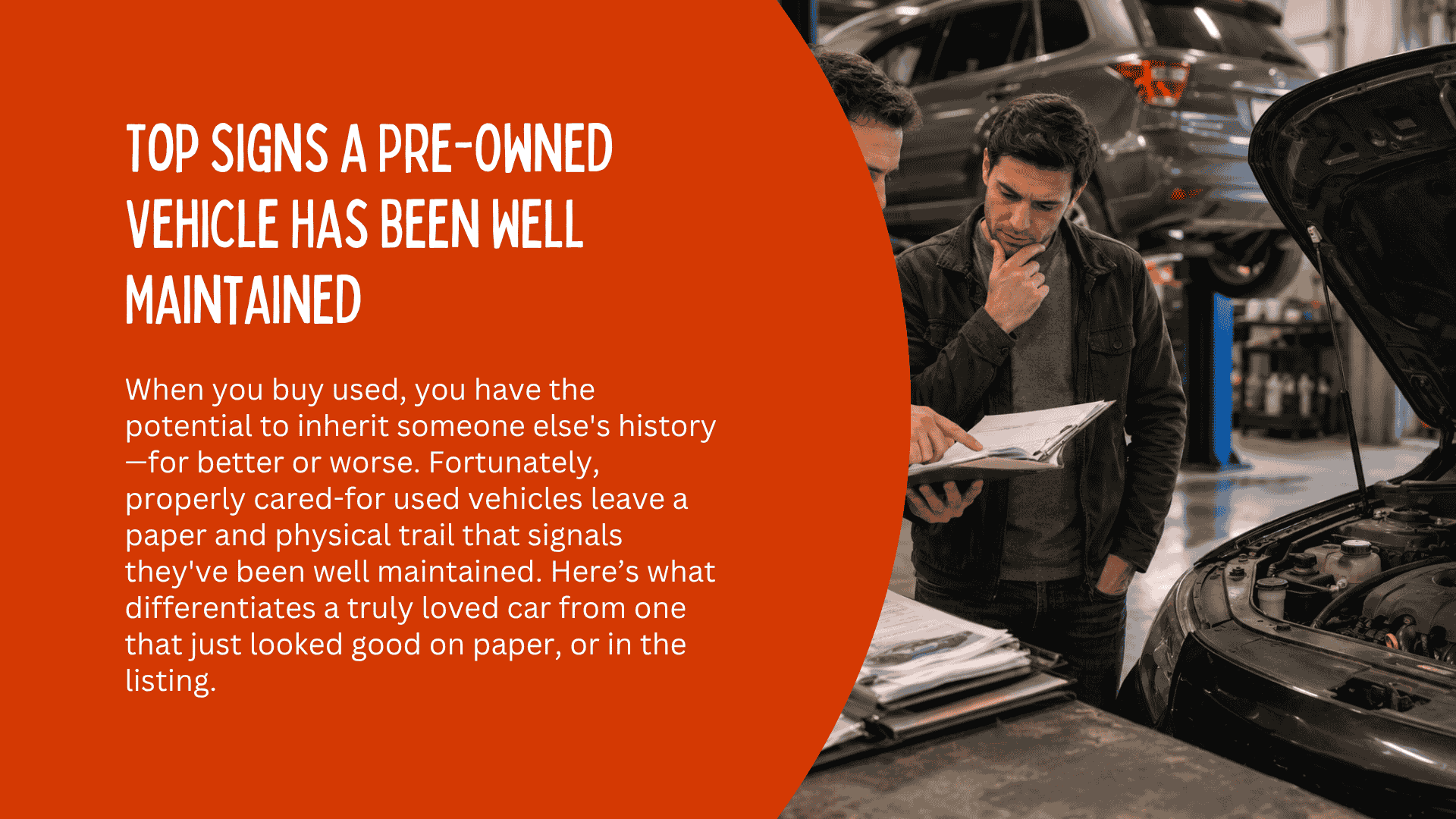
Top Signs a Pre-Owned Vehicle Has Been Well Maintained
Key Insights -The overall comprehensive maintenance record from a shop or single dealership would be preferable, showing evidence of proper car...
Read more
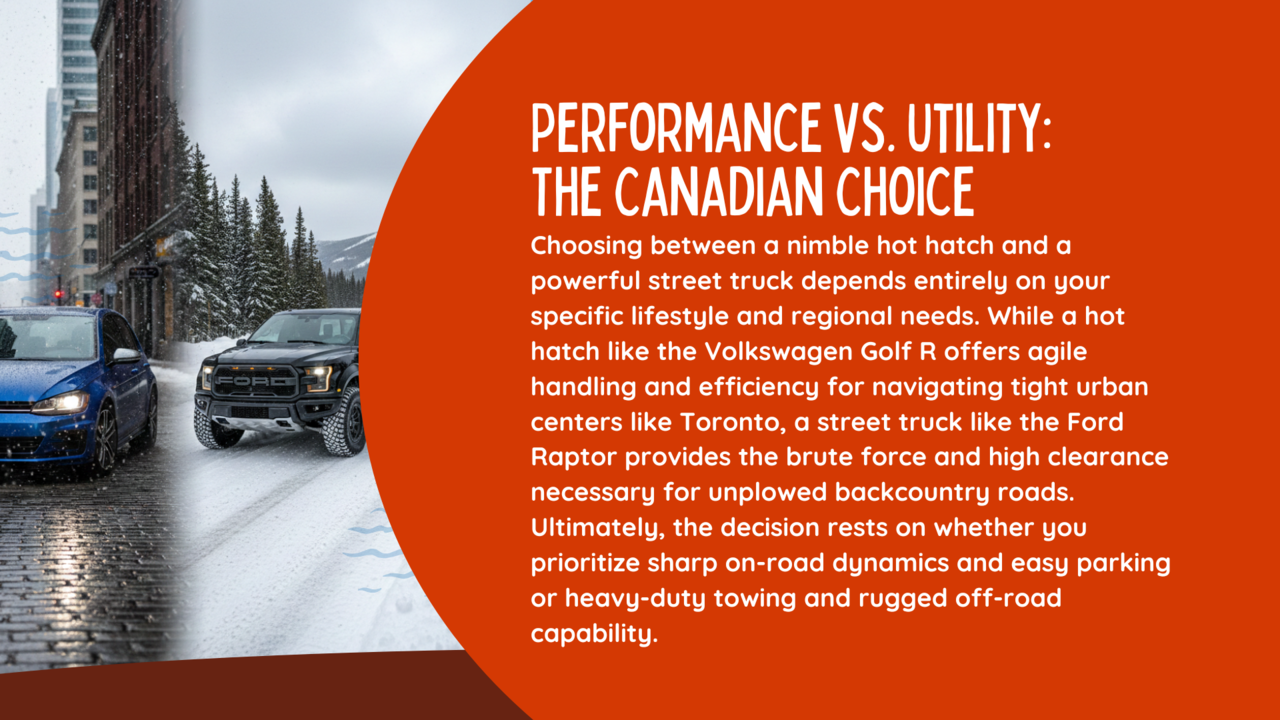
From a practical standpoint, selecting your next car is more about your lifestyle than it is about specifications. The argument between a powerful Street Truck and a nimble Hot Hatch has never been more pertinent to 2026's astute Canadian driver. Forget compromise—both provide thrilling performance without sacrificing usefulness. But which one actually suits your commute adventures and climate? This is more than just a car review; it's a guide to your ideal companion for everything from backroads in British Columbia to traffic in Toronto, updated with the most recent information on electrification and design psychology. Together, let's locate your match.
Let's get straight to it. In Canada, our cars need to do it all. A "practical performance" vehicle delivers real thrills without giving up everyday usefulness. It’s about usable power for your life, not just a track.
Two champions have emerged: the agile Hot Hatch and the mighty Street Truck. They share a goal but take different roads to get there.
Think Volkswagen Golf R or Toyota GR Corolla. These are compact cars injected with serious adrenaline. They pack turbocharged power, sporty handling, and hatchback cargo space. Perfect for zipping through Vancouver or a spirited drive to the cottage.
Enter the Ford F-150 Raptor or Ram 1500 TRX. These are high-performance trucks. They add enormous horsepower and tough off-road suspension while maintaining traditional utility features like towing payload and a bed. They create an adrenaline rush out of necessity. In short, one offers agile precision. The other delivers brute-force capability. Your lifestyle picks the winner.
Today's top vehicles blend daily use with serious performance. In the Hot Hatch vs. Street Truck debate, both have evolved. They now offer specialized traits without losing their practical core. Let's break down what each one brings to your Canadian driveway.
Think of a compact car turned up to eleven. Models like the Volkswagen Golf R or Honda Civic Type R are perfect examples. For rapid reaction, they employ powerful turbocharged engines, frequently with 200–315 horsepower. Our rough roads are handled by adaptive dampers and sport-tuned suspensions. You get a useful hatchback shape along with sharp styling. With fold-flat seats, the cargo area is surprisingly large for equipment or groceries. They are the ideal combination of backroad thrills and city-friendly size.
These machines take rugged utility and inject pure power. The Ford F-150 Raptor and Ram 1500 TRX lead the pack. They feature monstrous, supercharged V8 engines that often produce well over 400 horsepower. They add performance suspensions for high-speed off-road capability while maintaining the traditional truck utility of towing payload and a roomy bed. They also have luxurious technology throughout their interiors. They transform a necessary ability into a thrilling experience. In summary, your urban agility is mastered. The other demands space and strong power.
The Hot Hatch vs. Street Truck debate isn't static. It's being reshaped by major trends that every Canadian driver should watch. Here’s what’s changing the game right now.
Electrification is a game-changer. We are now considering electric options instead of just comparing gas-powered vehicles. Consider the Ford F-150 Lightning, which has zero tailpipe emissions and amazing torque. Electric versions of hot hatches will soon be available. Range on lengthy Canadian drives, charging times, and overall cost of ownership are new issues raised by this change. It's a completely different approach that combines sustainability and performance.
Modern technology is improving everyday driving in these cars. With adaptive suspension, you can quickly switch between comfort and sport modes, which is essential on our rough roads. Advanced 4WD and AWD systems, such as the torque vectoring of the Golf R, offer exceptional traction in slush and snow. Driver fatigue is reduced by driver-assist features. Additionally, lighter materials like aluminum increase truck payload and hatch efficiency. The gap between everyday usability and raw performance is getting smaller thanks to technology.
We have changing needs. Even in high-performance cars, fuel efficiency is becoming more important. This is pushing electrification and turbocharged engines. We need a single car for travel adventures and inclement weather, so versatility is essential. Reliability and safety are crucial. While crossovers are popular, they often lack the sharp dynamics of a hot hatch or the rugged utility of a street truck. The future here is about smart, multi-purpose vehicles that don’t compromise.
Choosing between a Hot Hatch and a Street Truck comes down to engineering. Let's look at the mechanical bits that matter for our roads.
Hot Hatches use small, turbocharged engines. Think of the Toyota GR Corolla's 1.6L with 300 hp. They're peppy and efficient, often hitting 8.0-10.0 L/100km.
Street Trucks go big. The Ram 1500 TRX has a 6.2L supercharged V8 with 702 hp. Fuel use is higher (12.0-18.0 L/100km), but electric options like the Ford F-150 Lightning change that game entirely.
Hot hatches have a stiff, light unibody for razor-sharp handling. Adaptive dampers smooth out potholes.
Street trucks use a tough body-on-frame design. Their long-travel suspensions, with FOX or Bilstein shocks, eat up brutal terrain and deep potholes.
Many hot hatches have sophisticated AWD (like the Golf R) for all-weather grip. Others are FWD and need great winter tires.
Street trucks feature advanced 4WD systems with multiple modes and locking differentials. They're built for deep snow and serious off-roading.
A hot hatch is light (around 1,500 kg) and compact. It's easy to park in Montreal or Vancouver.
A street truck is heavy (over 2,300 kg) and large. It offers a commanding presence and a huge cargo bed, but it can be tough in tight city spaces.
Let's discuss money. There are other factors to consider when deciding between a street truck and a hot hatch. The long-term financial picture in Canada must be understood. This entails examining the true cost of ownership over time, looking beyond the sticker price.
Car makers know we want both fun and function. For hot hatches, brands like Volkswagen and Honda have special performance lines (think Golf R, Civic Type R) that act as hero cars. They boost the brand's image and let you upgrade from a standard compact car.
For truck makers like Ford and Ram, performance models are top-tier products. Trucks like the F-150 Raptor or electric F-150 Lightning show off extreme power and capability, commanding premium prices. They target buyers who want the best and are willing to pay for it.
One notable advantage is: customization. Canada has a huge aftermarket scene for both vehicle types. Hot hatch owners often tweak engines for more power or adjust suspensions for better handling. It's a big part of the community.
The aftermarket for street trucks is even bigger. Think lift kits for off-roading, specialized tires, and performance upgrades. For many owners, modifying their truck is a key part of the experience, tailoring it for work or adventure.
This is crucial for your budget. Historically, full-size pickup trucks hold their value exceptionally well in Canada. High demand keeps used prices strong. Performance models can depreciate even more slowly.
Hot hatches can also hold value well, especially limited-run, popular models. Their enthusiastic appeal helps a lot.
Now, insurance. Be prepared: performance vehicles cost more to insure. Higher horsepower and a younger driver base are two factors driving up premiums for hot hatches. Insurance companies consider street trucks because of their high purchase price, expensive repairs, and powerful engines. Your final rate will be heavily influenced by your location and driving history.
The bottom line? A street truck will almost always have higher total ownership costs—more for fuel, insurance, and maintenance. Do a full budget analysis before you decide.
This isn't about specs on paper. Choosing between a hot hatch and a street truck is about your real life in Canada. Let's match the vehicle to your daily needs.
If you're in Toronto or Vancouver traffic, a hot hatch wins. Its small size makes parking easy. Fuel economy is better for stop-and-go trips. A model with AWD adds all-season confidence.
A street truck is tough in cities. Parking is hard, and fuel costs soar. If you need one, get 360-degree cameras to help.
Don't underestimate a hot hatch. Fold the seats flat for camping gear or hockey bags. It's great for road trips.
The street truck truly shines here. The open bed hauls anything—lumber, ATVs, boats. A crew cab fits the whole family in comfort.
A hot hatch needs dedicated winter tires. An AWD model, like a Golf R, is a winter warrior on plowed roads.
A street truck with 4WD and high clearance dominates deep snow. It powers through unplowed cottage roads with ease.
This is simple. A hot hatch isn't for towing. Use a roof rack for light gear.
Towing is a street truck's specialty. It can handle thousands of kilograms for boats, trailers, or work equipment.
Want agile cornering on a winding road? The connected feel of a hot hatch (like a Civic Type R) is pure joy.
Seeking raw power and off-road prowess? The breathtaking acceleration and trail capability of a Ford Raptor delivers a different kind of adrenaline.
Is it a street truck or a hot hatch? That depends on what you need for your driveway. For the city and the twisties, opt for a Golf R's razor-sharp agility. Choose a Raptors brute-force capability for the backcountry or the job site. Both provide excitement without sacrificing pragmatism; it all depends on your way of life.
Honestly, both can be great. An AWD hot hatch, think a Golf R on good winter tires, is a superstar on plowed streets and highways. But if you regularly face deep snow or unplowed cottage roads, the high clearance and 4WD of a street truck like a Raptor simply can't be matched.
You've got to look long-term. The hot hatch will save you money at the pump (think 8-10 L/100km) and often on insurance. But here's the thing—full-size pickup trucks have famously strong resale value in Canada. The truck might cost more monthly, but it could be worth more later.
For most trips, absolutely. Fold the seats down in a Civic Type R, and you'd be surprised what fits. But if "adventure" means towing a boat, hauling ATVs, or navigating rough, muddy trails, then you're squarely in street truck territory. It's about the scale of your gear.
It's a game-changer. There are already electric street trucks available, such as the Ford F-150 Lightning, which provide incredible torque without using gas. Next are hot hatches that are electric. Particularly for our long distances, the discussion is now more about battery range and charging locations than just gas mileage.
This is the classic compromise. SUVs and crossovers try, but they often end up in the middle. You might get okay handling and okay utility, but you'll miss the sharpness of a true hot hatch or the rugged, no-nonsense capability of a proper street truck. You usually have to pick a side.
Top Signs a Pre-Owned Vehicle Has Been Well Maintained
Key Insights -The overall comprehensive maintenance record from a shop or single dealership would be preferable, showing evidence of proper car...
Read more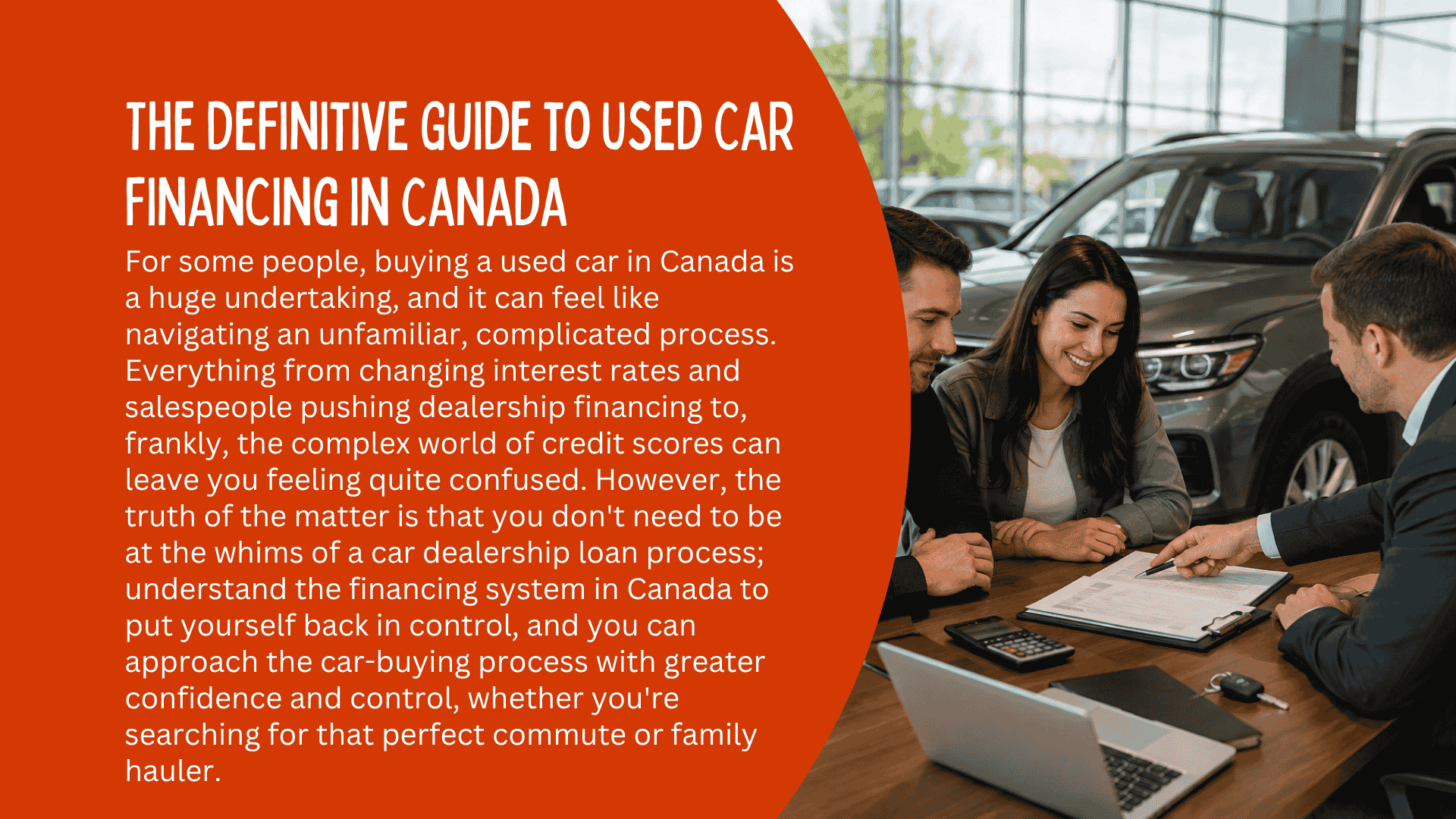
The Definitive Guide to Used Car Financing in Canada
Key Insights Work with your own bank or credit union to get a loan pre-approved, as that will give you an impressive bargaining chip against your...
Read more
How Trade-In Value Affects Your Next Pre-Owned Vehicle Purchaseac
How Trade-In Value Affects Your Next Pre-Owned Vehicle Purchaseac Trading in your current car is often the fastest way to lower the cost of your...
Read morePowered and developed by
