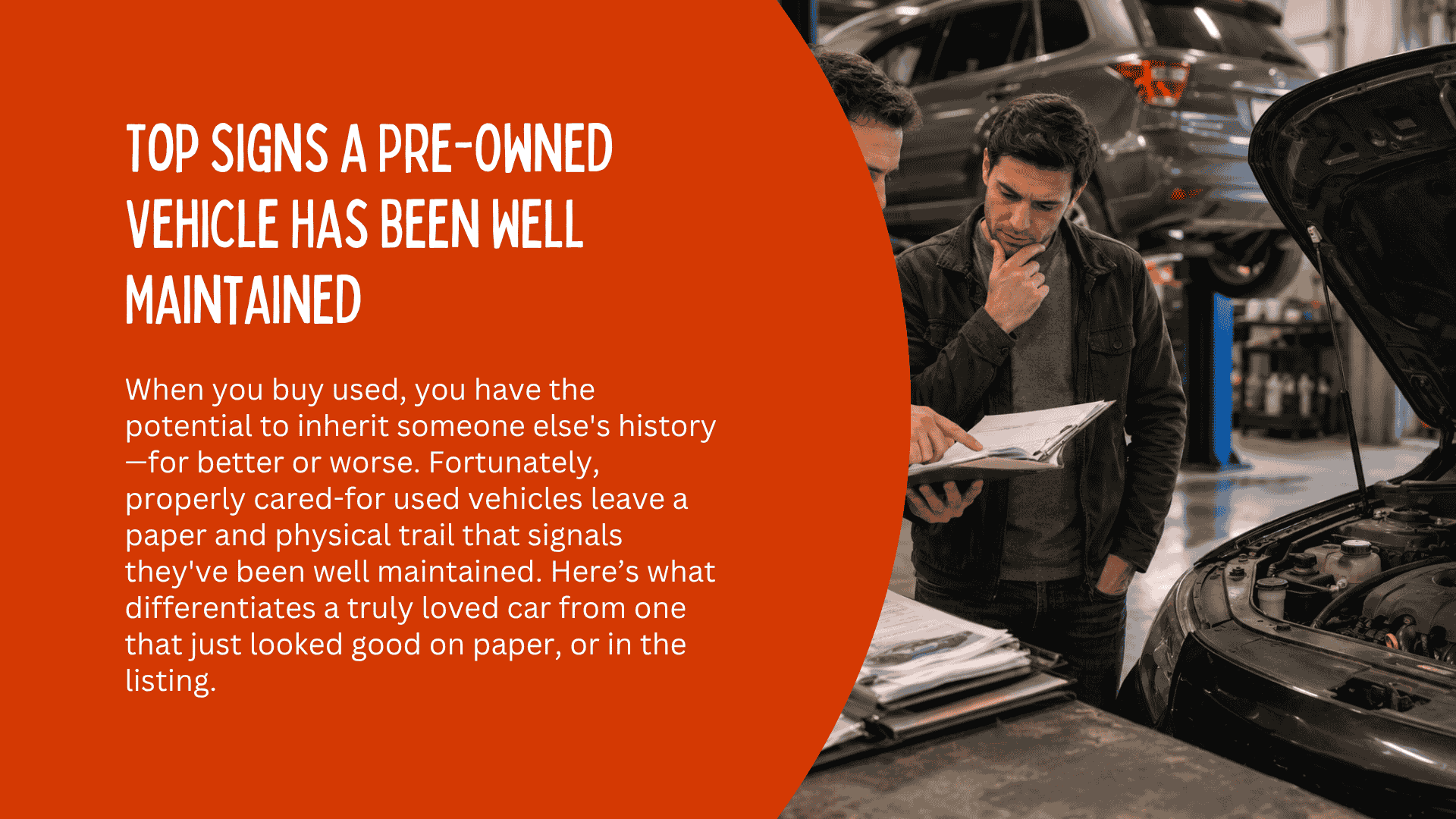
Top Signs a Pre-Owned Vehicle Has Been Well Maintained
Key Insights -The overall comprehensive maintenance record from a shop or single dealership would be preferable, showing evidence of proper car...
Read more
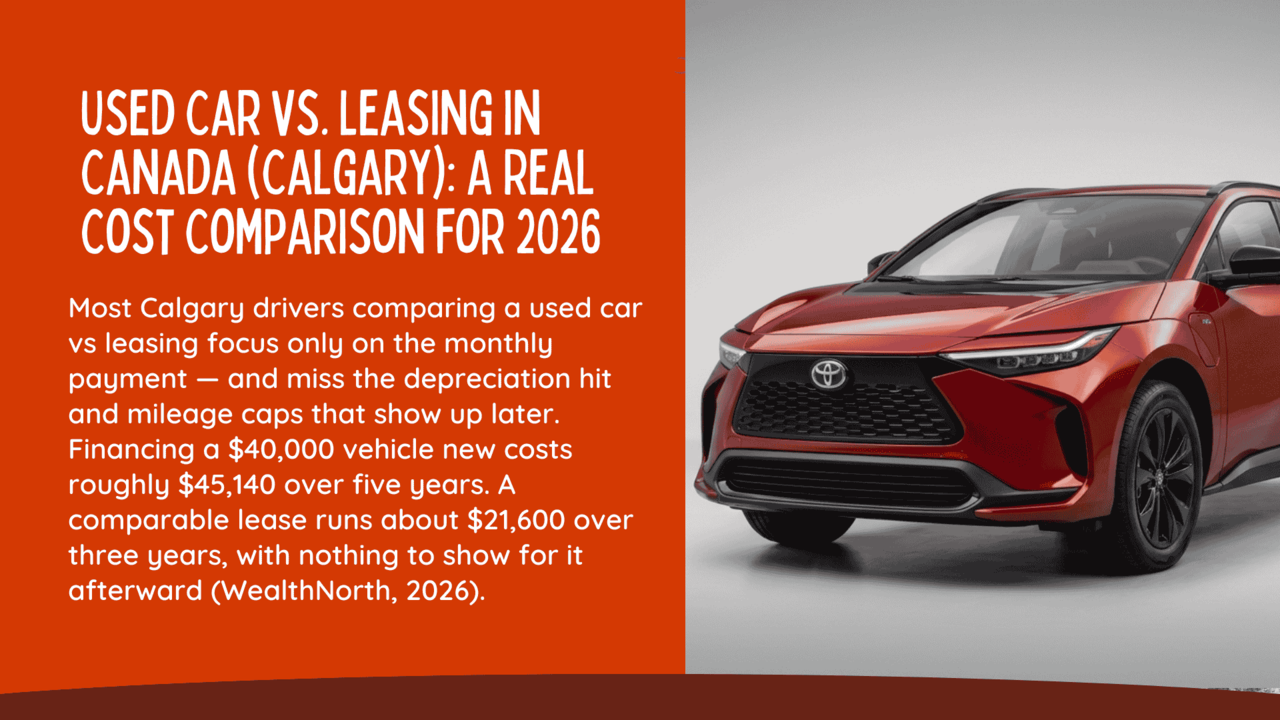
Most Calgary drivers comparing a used car vs leasing focus only on the monthly payment — and miss the depreciation hit and mileage caps that show up later.
Financing a $40,000 vehicle new costs roughly $45,140 over five years. A comparable lease runs about $21,600 over three years, with nothing to show for it afterward (WealthNorth, 2026).
At Autos House Calgary, we walk buyers through this exact monthly payment comparison car decision every week.
By the end of this guide, you'll know which option fits your driving habits, budget, and plans for the next five years.
Buying a used car builds equity with every payment. Leasing only pays for the vehicle's depreciation; you return it, owning nothing.
When you finance a used vehicle, your payments reduce the loan balance. Once it's paid off, the car is yours, free and clear (Canada Drives, 2026).
A lease works differently. The car financing vs leasing Calgary math is really a depreciation calculation, plus interest, over a fixed term of 24 to 48 months.
Second hand vehicles escape the sharpest depreciation. New vehicles depreciate by 20–30% after just 12 months. (Finder Canada, 2026).
Pro Tip: Request the dealership to give you the total out-the-door price that you will be paying over the years you expect to drive that vehicle. Do not settle for just the monthly payment.
Next, here's exactly what a used car purchase costs you in Alberta, tax included.
Alberta has no provincial sales tax on vehicles. A used car bought from a private seller in Calgary carries zero sales tax.
This is one of the clearest used car purchase benefits specific to Alberta. The CRA confirms GST/HST generally doesn't apply to private vehicle sales (Canada Revenue Agency, 2026).
Buyers in BC or Ontario pay 12–13% provincial tax on the same private sale. Alberta is the only province that charges nothing.
A licensed Calgary dealership still charges 5% GST. But you also get safety inspections, warranty options, and financing support a private sale doesn't offer.
Why?: Alberta funds operations through resource revenue rather than broad consumption taxes — a structural advantage most national guides miss.
That tax gap matters. But the bigger swing factor is what happens to the car's value over time.
Lease agreements cap you at 16,000 to 24,000 kilometres a year. Every kilometre over that limit costs $0.10 to $0.30 at lease-end.
That overage charge adds up fast. An extra 5,000 km on a typical lease can cost $400 to $1,500, depending on the brand (Auto Lending Canada, 2025).
For Calgary drivers commuting from Airdrie, Okotoks, or Cochrane, those kilometres accumulate fast — often without the driver tracking it.
A used vehicle you own removes that ceiling entirely. You can drive 30,000 km a year with zero penalty — one of the most overlooked used car purchase benefits for higher-mileage commuters.
Pro Tip: Like it or not, if you're locking yourself into a lease and clock watching then buy the higher number of kilometres, especially if you average more than most. It's usually cheaper than paying the overage.
Mileage is one variable. The other is what the CRA lets you actually deduct if this vehicle supports a Calgary small business.
If you use the vehicle for business, the CRA caps deductible lease costs at $1,100 per month before tax. Loan interest is capped at $350 per month.
These limits, confirmed by the Department of Finance Canada, apply regardless of your actual lease or loan payment (Department of Finance Canada, 2026).
If you finance a used vehicle instead, the capital cost allowance (CCA) ceiling for Class 10.1 vehicles sits at $39,000 before tax for 2026.
This is the one that most guides overlook: the odds are in favor of buying the used car rather than the new one because the deduction limit applies equally.
Why?: These caps stop a business owner from writing off a luxury lease as a routine expense. They're built around typical passenger vehicle costs.
If you're not buying for business use, the comparison comes down to a simpler question: total cost over the years you'll keep the car.
Leasing wins on monthly payment and access to a newer vehicle. Buying used wins on total cost, ownership, and freedom from mileage rules.
As Consumer Reports highlights, leasing isn't just about keeping your monthly costs manageable. It’s also an easy shortcut to driving a nicer vehicle—giving you access to those upgraded trims and luxury features without the luxury price tag.(Consumer Reports, 2026).
The downside? You’re trapped in a loop of ongoing payments with absolutely nothing to show for it. Instead of building equity, you’re essentially sinking money into a worthless asset.
Below is the side-by-side breakdown:
|
Factor |
Used Car (Buy) |
New Car (Lease) |
|
Monthly payment |
Typically, a lower principal, fixed loan payment |
Lower than financing the same model new |
|
Ownership at term end |
You own the car outright once it's paid off |
You return it — zero equity built |
|
First-year depreciation hit |
Already absorbed by the previous owner |
You absorb 20–30% in year one (Finder Canada, 2026) |
|
Mileage limits |
None — drive as much as you want |
16,000–24,000 km/year typical; overage fees apply |
|
Total 5-year cost |
Generally, the lowest if the vehicle is reliable |
Can exceed financing cost if you re-lease repeatedly (WealthNorth, 2026) |
Specific reader benefit: choosing used over a comparable new lease typically saves Calgary buyers $15,000–$20,000 over five years.
With the trade-offs mapped out, here's how to apply them to your situation.
Before making a decision, take a quick look at three key factors:
A reliable lease vs buy car calculator Canada approach factors in the 20/4/10 rule — 20% down, a 4-year term, payments at or under 10% of income (MoneyMetrics, 2026).
Apply that framework to either option, and price in GST, registration, and insurance for an honest total.
Most Calgary buyers we work with find the lease “savings” shrink once they account for insurance and the cost of re-leasing every three years.
Pro Tip: If you re-lease every 3 years indefinitely, you never escape monthly payments. Run the math on 15 years of leasing versus buying used once.
In Canada, When comparing used car ownership with leasing in Canada, long-term ownership costs are often the deciding factor. For the majority of Calgary drivers who own cars for more than three years, buying used is the best option. Only short, regular, low-mileage driving makes sense when leasing.
Ready to compare real used inventory against a new lease? Book a free 20-minute walkthrough with Autos House Calgary, no pressure, just the real total.
Q: Is it cheaper to buy a used car vs. lease in Canada (Calgary)?
Buying used is cheaper over 4+ years in almost every case. A 5-year used loan runs about $45,140 versus $21,600 for a 3-year lease with no ownership.
Q: Does Alberta charge tax on a used car purchase?
Private sales carry no GST or PST. Dealership purchases carry 5% federal GST only Alberta has no provincial sales tax.
Q: What happens if I drive over my lease's mileage limit?
You'll pay $0.10 to $0.30 per excess kilometer at lease-end, often $400 to $1,500 total. Owning a vehicle removes this limit completely.
Q: Can I deduct lease payments on my taxes if I use the car for business?
A: Yes, up to $1,100 per month before tax for 2026 leases. A licensed accountant can confirm how this applies to your filing.
Q: How much value does a used car lose compared to a new one?
New cars lose 20–30% of value in year one; a 2–3-year-old used car has already absorbed most of that drop.
Top Signs a Pre-Owned Vehicle Has Been Well Maintained
Key Insights -The overall comprehensive maintenance record from a shop or single dealership would be preferable, showing evidence of proper car...
Read more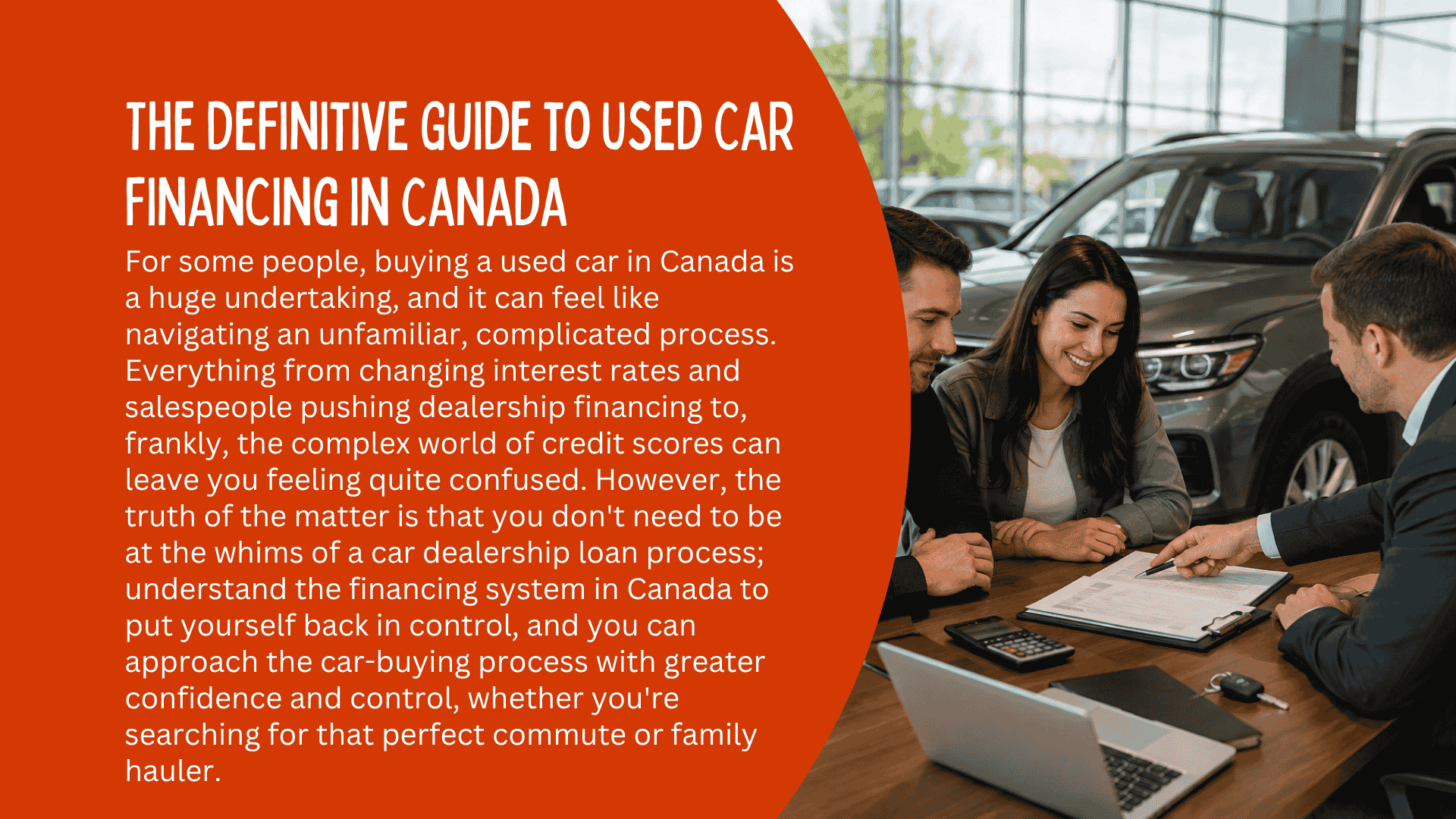
The Definitive Guide to Used Car Financing in Canada
Key Insights Work with your own bank or credit union to get a loan pre-approved, as that will give you an impressive bargaining chip against your...
Read more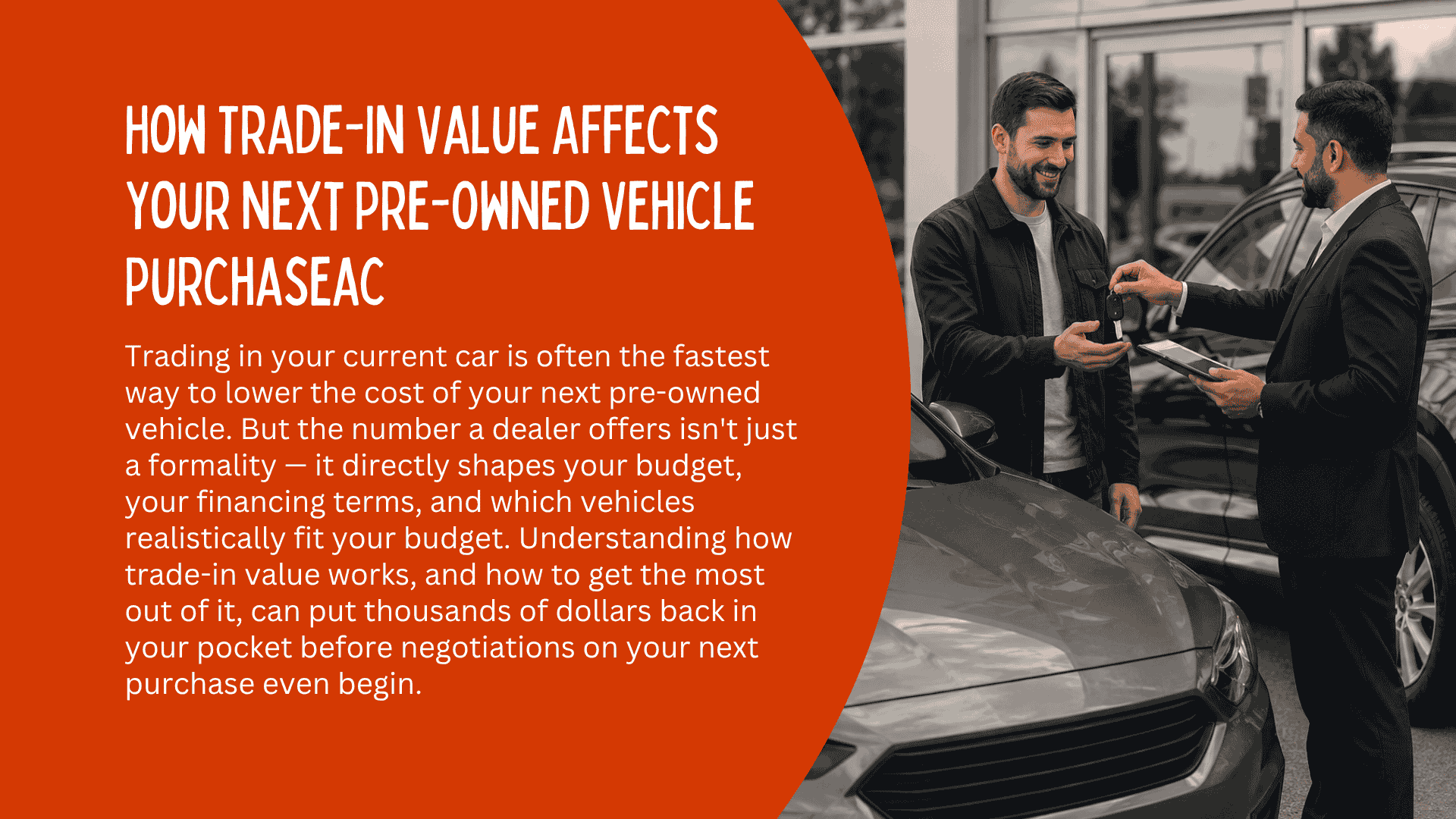
How Trade-In Value Affects Your Next Pre-Owned Vehicle Purchaseac
How Trade-In Value Affects Your Next Pre-Owned Vehicle Purchaseac Trading in your current car is often the fastest way to lower the cost of your...
Read morePowered and developed by
