Pre-Owned SUV Calgary: The Ultimate Buyer's Guide to SUVs, Sedans, and Trucks
Calgary’s driving conditions are famously unpredictable. One minute you are cruising down a bone-dry stretch of Stoney Trail under a bright blue...
Read more
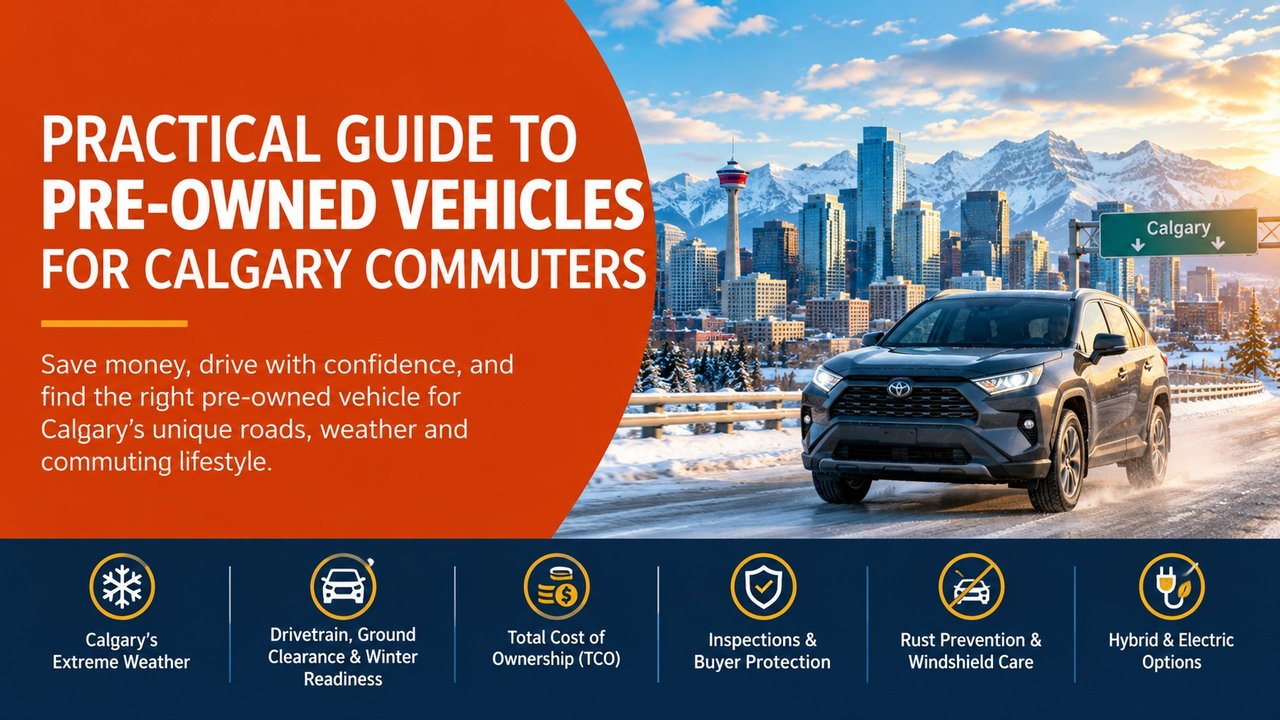
One day you're driving along Stoney Trail on a clear, dry day; the next you may find yourself gripping the steering wheel tightly while navigating Bow Trail during an October snowstorm. Between the winding valley roads, the Deerfoot bottleneck, and the yearly chinook cycle of freezing rain and sticky snow that turns Calgary roads into ice rinks. But buying a reliable car isn't about dropping all of your hard-earned cash on a fancy new car that will double your monthly payments. Instead, it's about exploring the pre-owned vehicles Calgary offers and saving thousands of dollars.
Calgary's terrain is stunning, but it can be challenging for everyday drivers. When a Chinook moves through the region, temperatures can rise rapidly; you might see a foot of snow melting into asphalt in a matter of hours. That kind of change can be tough to work with, and people who drive to work here have had to adapt.
All-wheel drive (AWD) can improve traction when accelerating from a standstill. A Front Wheel Drive car wearing a quality set of winter tires, such as Michelin X-Ice or Bridgestone Blizzak models. will almost always outperform an AWD-equipped car with entry-level all-season rubber in winter driving. Front-wheel-drive vehicles are also generally lighter, easier to service, and more fuel-efficient. Also consider the car's suspension. Calgary roads endure a harsh weather cycle of deep, rarely plowed potholes and frost heaves that can turn the road surface into a rough, uneven driving surface.
A vehicle's sticker price is only a starting point. To find dependable used cars Calgary drivers can keep long-term, consider total cost of ownership (TCO). That includes fuel consumption, insurance premiums, and routine maintenance costs. Auto insurance in Alberta can be high, especially if a vehicle has expensive windshield or bumper safety sensors that must be replaced after a minor fender bender, and the parts alone can be pricey. If you live in a Greater Calgary community, such as Okotoks or Cochrane, and commute to Calgary, you probably log about 25,000 km per year. With an average fuel price of $1.45 CAD/litre, the annual fuel cost savings between vehicle classes is astonishing:
In Alberta, you're protected when you buy a vehicle from a licensed dealership. A properly qualified mechanic must complete this form and submit it to the Alberta Motor Vehicle Industry Council within 120 days after you purchase the vehicle. They assess key safety features, such as brakes, steering, and lights. Buying from a private seller is a bit riskier, so do your homework before you buy; you won't have the protection of AMVIC regulations. Pull a CARFAX report to confirm there are no liens or outstanding services, and check whether it's ever been in an accident or registered out of province. If the private seller won't let you inspect the vehicle or provide a CARFAX report, go to another seller.
Our city road crews do an incredible job keeping our streets and highways safe, but the salt and chemicals they use on roads can destroy a car. The spray turns into a fine mist that settles on your vehicle's underside, quickly rotting metal seams, suspension components, and electrical connections. To save money, choose a vehicle treated with an oil-based rust-proofing system like Krown. Avoid thick, rubberized coatings that can crack over time, trap moisture and road salt in hard-to-see places, and rot your car out faster. Check the front windshield thoroughly before you buy; under Alberta regulations, a crack that blocks the driver's direct line of sight is illegal. If it's been broken, use it as a bargaining tool to bring down the purchase price to the cost to replace it ($350 to $900 CAD, depending on whether your vehicle has cameras for advanced driver-assist technology that need to be calibrated).
As public transit gets cleaner, lots of Calgary drivers are wondering about electric cars and hybrids. Because lithium-ion batteries are chemical-based, they struggle to perform in the cold. On a cold stretch of -20C or worse, that can cut an all-electric car's range by 30% to 50%, mostly because of battery performance issues and the strain on the heater. If you have a heated garage or a plug-in parking spot you can use overnight, a used EV remains an exceptionally cheap, reliable option.
Is All-wheel drive (AWD) necessary for driving in Calgary?
AWD is great if you're heading up Bow Trail in a snowstorm, but it's not the end of the world if you don't have it. Reliable winter driving depends more on the quality and use of your tires than the type of drivetrain you buy. AWD can get you going from a standstill better, but it won't help you stop any faster on snow, snow/ice, or ice; only high-quality, dedicated winter tires will. Choosing a quality winter tire is always the better value in snow country.
Does Calgary's Cold Weather Reduce EV Range?
In extreme cold snaps of -20 °C to -30 °C or colder, a battery-electric vehicle (EV) will generally lose 30-50 percent of its range because the chemical reaction rate inside the lithium-ion battery slows and the car needs energy to heat the cabin. But if your daily round-trip commute doesn't exceed 100 km and you can recharge at home overnight, a used EV is still a very efficient and cost-effective solution.
What should I watch for when purchasing a used car from a private seller in Calgary?
When buying privately, you have very little protection. Then ask for a CARFAX report to confirm it has no financial liens, isn't a salvage vehicle, and has no major accidents. Make sure the VIN matches on all panels, do a cold start, and have the seller agree to take it to an independent mechanic for a full inspection.
Finding the ideal vehicle for your everyday Calgary drive comes down to being smart and practical. With the city's extreme elevation changes, unpredictable weather, and Calgary's size, you'll want a durable vehicle. When browsing pre-owned vehicles Calgary, rely on unbiased research and independent inspections. Research the vehicle's history and schedule an independent third-party inspection.
Pre-Owned SUV Calgary: The Ultimate Buyer's Guide to SUVs, Sedans, and Trucks
Calgary’s driving conditions are famously unpredictable. One minute you are cruising down a bone-dry stretch of Stoney Trail under a bright blue...
Read more
The Smart Buyer's Guide to Used Hybrid Cars Calgary
Driving in Calgary is a unique challenge. When you combine long commutes with fluctuating fuel prices, transportation costs can put extra pressure...
Read more
Most Reliable Pre-Owned Vehicles That Hold Their Value
Key Takeaways Pre-owned Toyota, Honda, Mazda, and Subaru vehicles have a great reputation for outstanding reliability and strong resale value....
Read morePowered and developed by
