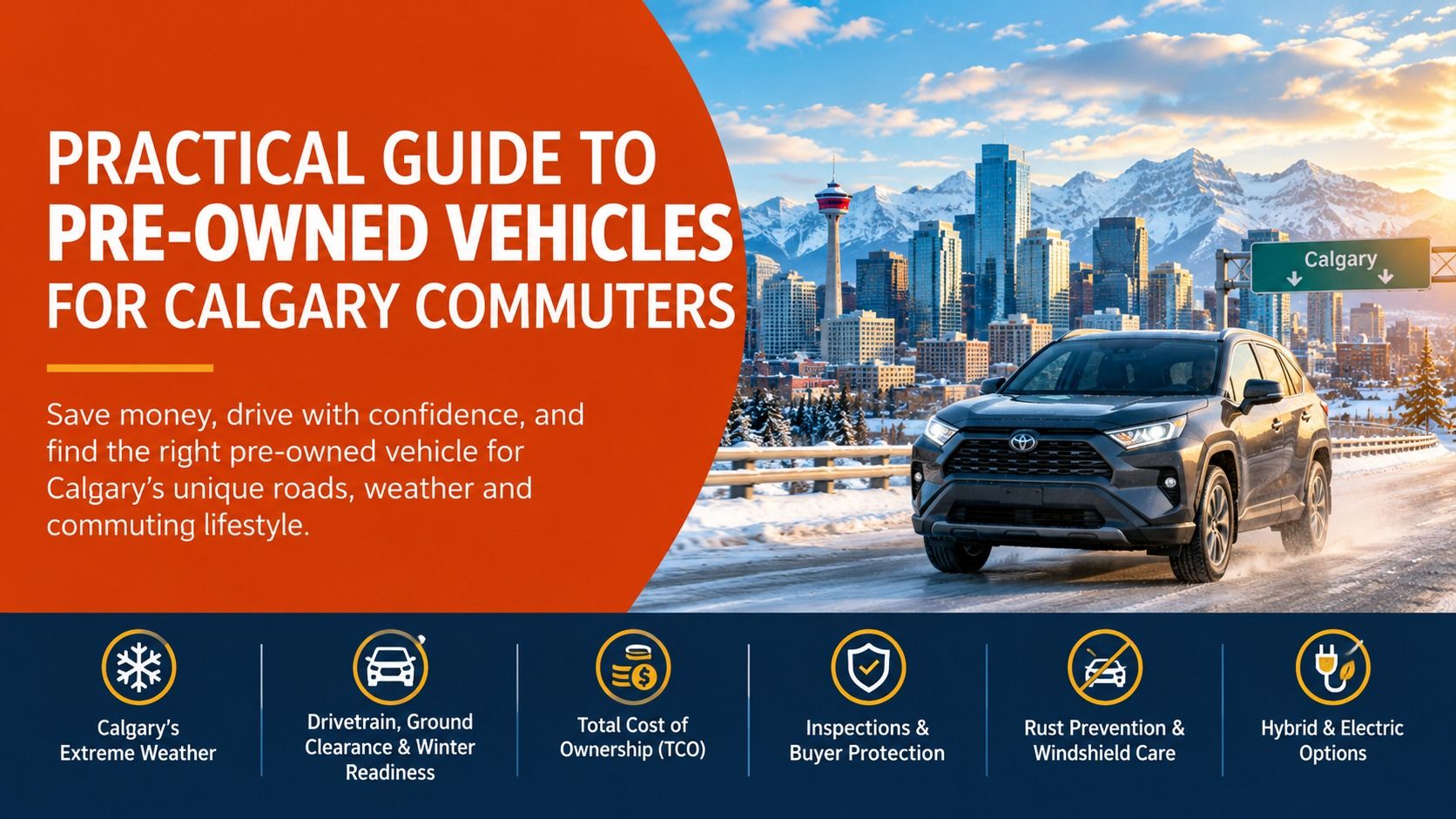
Practical Guide to Pre-Owned Vehicles for Calgary Commuters
One day you're driving along Stoney Trail on a clear, dry day; the next you may find yourself gripping the steering wheel tightly while navigating...
Read more

Calgary’s driving conditions are famously unpredictable. One minute you are cruising down a bone-dry stretch of Stoney Trail under a bright blue sky, and the next you are steering your wheel through a sudden mountain blizzard on your way to Banff. Our high elevation, extreme winter cold, and rapid temperature swings create a uniquely demanding environment for any vehicle. It is no wonder choosing the right ride here feels vastly different from buying a car in milder cities like Vancouver or Toronto. It's about comfort, relaxation, and choosing a vehicle that reflects what you intend to showcase in your life. This matters because it helps you choose the best car that matches your interests and meets the needs of the hour. In this situation, choosing a vehicle that matches your taste and lifestyle matters most.
To understand what makes a vehicle work in Calgary, look at our local geography and climate. Our city is massive, sprawling across more than 825 square kilometers of foothills terrain. Because everything is so spread out, Calgary drivers rack up serious kilometers, often spending hours commuting on high-speed arteries like Deerfoot Trail or the ring road. That means quiet cabin manners, comfortable seats, and highway stability aren't just luxury features—they are daily essentials.
Then, of course, there is the Chinook phenomenon. These warm, dry winds are a beloved winter break, but they wreak absolute havoc on our roads. When a Chinook rolls in, it melts feet of snow in a matter of hours. As soon as the wind dies down, that standing water freezes solid, turning major overpasses into skating rinks of black ice. Add corrosive slush mixed with road salt and calcium chloride, and you have a recipe for severe wear and tear.
When you shop for a pre-owned SUV, Calg ary dealerships will offer several drivetrain options. Understanding how these systems perform in snow and ice is critical to keeping your family safe. Let's break them down in plain English. Front-wheel drive (FWD) is standard on most compact cars and entry-level crossovers. Because the heavy engine and transmission sit directly over the front wheels, FWD cars have surprisingly decent traction in light snow. When paired with high-quality winter tires, a FWD sedan can handle most of Calgary's cleared commuter routes without issue. Rear-wheel drive (RWD), on the other hand, is a different beast. Pushing a vehicle from the back is great for summer performance, but on a slick Calgary hill, a RWD vehicle can easily fishtail. Unless you are an experienced driver with excellent winter tires and a trunk full of sandbags, RWD is tough to recommend for year-round Alberta driving.
All-wheel drive (AWD) is king in Calgary winters, which is why so many buyers look for a pre-owned SUV Calgary option. Most modern SUVs use "slip-and-grip" AWD systems that run in front-wheel drive to save fuel until they detect wheel spin, then instantly send power to the back. Premium full-time AWD systems, like Subaru's Symmetrical AWD or Audi's Quattro, actively distribute power to all four wheels at all times. These systems offer incredible stability on patchy, ice-covered winter roads. Finally, traditional four-wheel drive (4WD) is found on body-on-frame pickup trucks. This selectable system mechanically locks the front and rear axles together. It is unmatched in deep, unplowed snow or muddy job sites, but you cannot run it on dry pavement without damaging your drivetrain.
For most of us, finding the best vehicle for Calgary drivers means balancing daily practicality with weekend fun. We live right on the doorstep of the Rocky Mountains, and our vehicles need to reflect that. A versatile used SUV that Calgary families select often serves as the ultimate multi-tool. With split-folding rear seats, a spacious hatchback cargo area, and optional roof racks, you can easily pack up skis, mountain bikes, camping gear, and groceries without breaking a sweat.
If you commute from suburban communities like Cranston or Panorama Hills to a downtown office, a used sedan Calgary dealers have in stock is a smart, cost-effective choice. Sedans offer superb fuel economy—often averaging 7.0 to 8.5 liters per 100 kilometers—and a lower center of gravity that makes them nimble around corners. Because the market has shifted so heavily toward utility vehicles, used sedans depreciate faster. In other words, you can often buy a newer, lower-mileage sedan loaded with premium features for the same price as an older, high-mileage SUV.
When calculating the total cost of ownership in Calgary, look past the sticker price. Fortunately, the "Alberta Advantage" works in our favor. With no provincial sales tax (PST), buying a used vehicle from a licensed dealer means you only pay the 5% federal GST. If you purchase your vehicle through a private sale, you pay 0% tax, which can save you thousands of dollars compared to buying in neighboring provinces.
Another local reality is windshield damage. Because the City of Calgary spreads sand and gravel on winter roads rather than pure salt, flying rocks are a constant hazard on Deerfoot Trail. It is almost a rite of passage to have a chipped or cracked windshield here. When shopping for a pre-owned vehicle, look for one with Paint Protection Film on the front bumper and hood to keep paint chips from turning into rust. Also, always ensure the vehicle has a functioning block heater. Plugging in when temperatures drop below -15°C saves your battery and drastically reduces engine wear during cold morning starts.
Why does my car's fuel economy drop so drastically during a Calgary winter?
It is completely normal for your fuel economy to drop by 15% to 20% in cold weather. Calgary's extreme cold increases the viscosity of your engine oil and transmission fluid, making the mechanical components harder to turn. Additionally, cold engines take much longer to reach their optimal, fuel-efficient operating temperature. With the added electrical draw from heaters, defrosters, and heated seats, plus the lower energy density of winter-blend gasoline, your engine has to work much harder to cover the same distance.
What is the difference between an AMVIC Mechanical Fitness Assessment and a pre-purchase inspection?
In Alberta, licensed dealerships are legally required to provide you with an AMVIC Mechanical Fitness Assessment (MFA) before you buy a vehicle. The MFA is a basic safety checklist that shows the vehicle's critical safety systems—like brakes, steering, seatbelts, and lights—met minimum provincial standards on the day of the test. An independent pre-purchase inspection (PPI), however, is a comprehensive evaluation that you pay a trusted mechanic to perform. A PPI goes much deeper, assessing the engine, transmission, all-wheel-drive components, and electrical systems to find hidden wear items that could lead to expensive future repairs.
Why are used pickup trucks so expensive to insure in Alberta compared to other vehicles?
Pickup trucks generally carry higher insurance premiums in Alberta because of their size, weight, and market value. Because they are larger and heavier, they can cause more significant collision damage than a compact sedan. Additionally, used trucks hold their value well in our province, so insurance companies pay more to replace them in a total loss. Certain pickup models are also highly targeted by vehicle thieves, which further drives up the comprehensive insurance rates for these vehicles.
How does Calgary's high altitude affect the performance of a used vehicle?
Calgary sits at an elevation of 1,045 meters above sea level, where atmospheric pressure is lower, and the air contains less oxygen. Turbocharged engines, however, use a mechanical compressor to force air into the engine. This lets them overcome lower air pressure and maintain their rated horsepower, making them feel much more responsive when climbing steep hills or driving into the mountains.
What is the best way to prevent rust on a pre-owned vehicle driven in Calgary?
The most effective way to prevent rust is to wash your vehicle regularly during the winter months, paying close attention to spraying out the wheel wells and undercarriage to remove corrosive salt and road grime. Also, apply a high-quality, oil-based rust inhibitor (like Krown or Rust Check) to the undercarriage every autumn to create a strong protective barrier. Finally, quickly touch up any paint chips on the hood and body panels to prevent moisture from getting under the clear coat.
Practical Guide to Pre-Owned Vehicles for Calgary Commuters
One day you're driving along Stoney Trail on a clear, dry day; the next you may find yourself gripping the steering wheel tightly while navigating...
Read more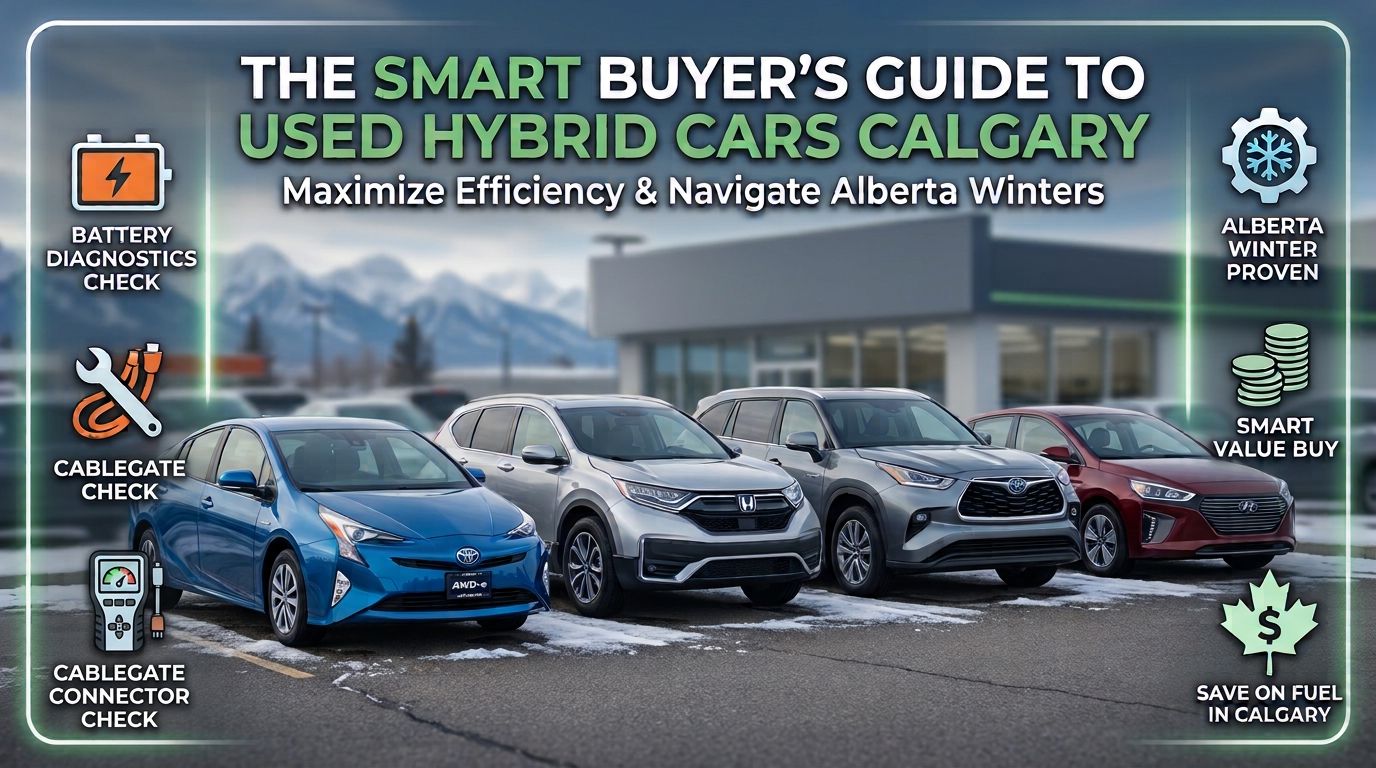
The Smart Buyer's Guide to Used Hybrid Cars Calgary
Driving in Calgary is a unique challenge. When you combine long commutes with fluctuating fuel prices, transportation costs can put extra pressure...
Read more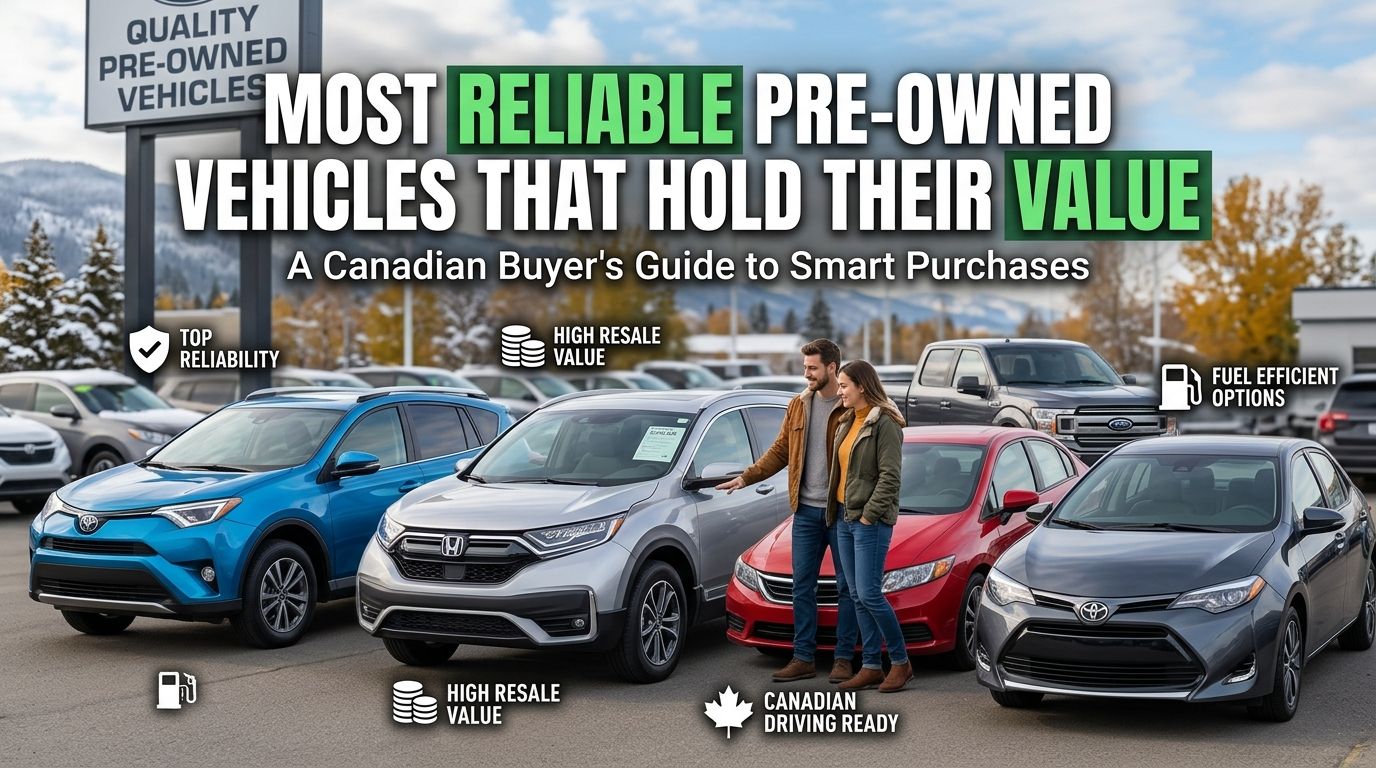
Most Reliable Pre-Owned Vehicles That Hold Their Value
Key Takeaways Pre-owned Toyota, Honda, Mazda, and Subaru vehicles have a great reputation for outstanding reliability and strong resale value....
Read morePowered and developed by
