
Most Reliable Pre-Owned Vehicles That Hold Their Value
Buying a used car used to mean taking a financial hit the second you drove off the lot. For many cars, that is still true. A handful of models can...
Read more
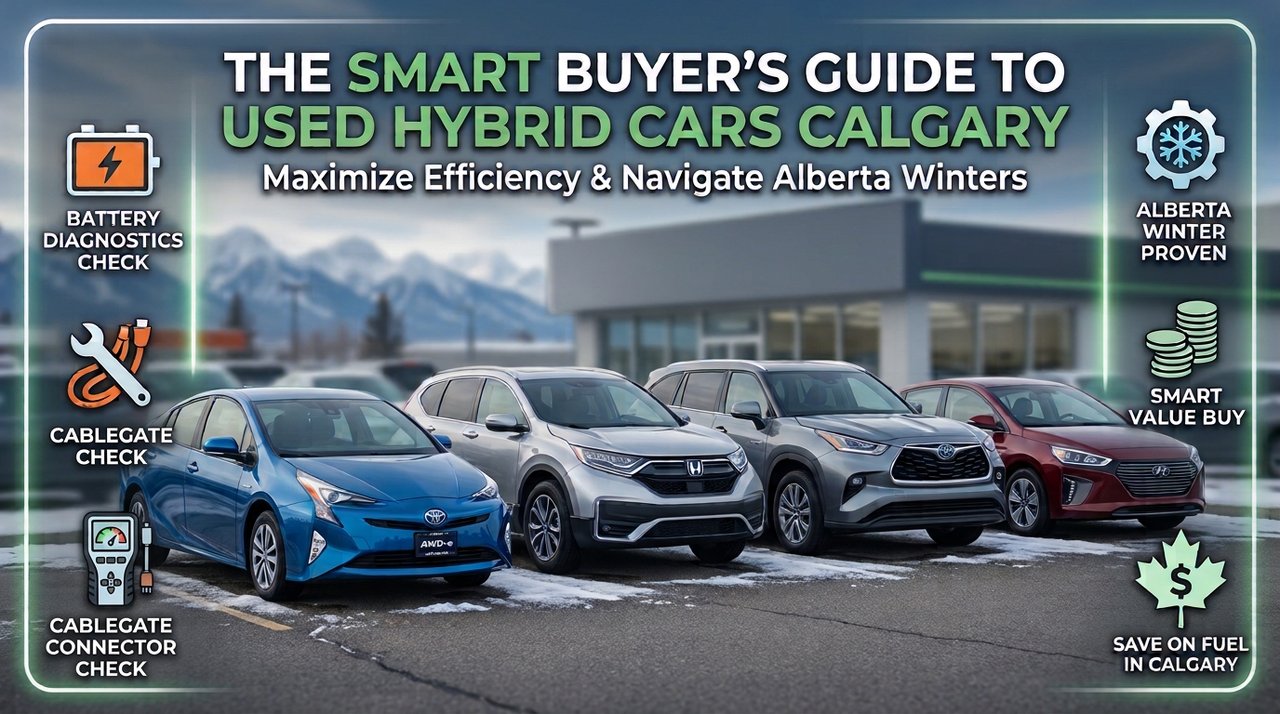
Driving in Calgary is a unique challenge. When you combine long commutes with fluctuating fuel prices, transportation costs can put extra pressure on household budgets. Heavy, high-displacement pickups and large sport utilities once ruled our streets. Savvy commuters are turning to the pre-owned market for highly efficient alternatives that don't compromise on winter capability.
If you have looked at your monthly expenses lately, you already know that the general cost of living in Southern Alberta has risen sharply. From municipal tax adjustments to spiking utility rates, Calgary households are actively looking for areas to optimize their budgets. Transportation is often the easiest place to find immediate, meaningful savings. What’s interesting is that purchasing a pre-owned hybrid allows you to double-dip on these economic benefits.
Let’s break down the three primary configurations you will run across in the pre-owned market. First, we have parallel hybrids. They let the gas engine and electric motors work together or on their own. A quality pre-owned PHEV typically gives you between 30 and 80 kilometers of purely electric driving range before it switches to conventional hybrid mode. If you live in a Calgary suburb and work downtown, a PHEV can easily handle your entire daily commute without burning a single drop of fuel, while still retaining a gas engine for weekend road trips to the mountains.
Another challenge is cabin heating. In a standard gas car, cabin heat is simply a free byproduct of a highly inefficient engine. Hybrids are so thermally efficient that their engines run far less often, meaning they generate much less waste heat. To keep you warm during a freezing Calgary winter, the onboard computer will run the gas engine continuously just to pump hot coolant through the heater core. On short trips across town with the heater blasting, your fuel economy will look closer to that of a conventional SUV. However, hybrids offer a massive, often overlooked winter benefit: starting reliability. Utilizing a block heater and installing winter grille covers are also highly effective ways to help the engine reach and maintain its ideal operating temperature.
When you are hunting for dependable, fuel-efficient used cars, Calgary lots should focus on vehicles with a rock-solid track record of reliability, readily available parts, and proven winter resilience. Let's look at some of the standout performers currently available on the pre-owned market. If you prefer a sportier driving experience and want modern cabin tech, keep an eye out for a used Hyundai Ioniq Hybrid (2017–2022). Instead of using an e-CVT, Hyundai equipped the Ioniq with a six-speed dual-clutch automatic transmission. This gives it a highly conventional, engaging feel when you accelerate.
If you are shopping for third-generation models (2010–2015), you get a highly durable hatchback, but you must check the service history. The 1.8-liter engine can suffer from carbon buildup in the Exhaust Gas Recirculation (EGR) valve, which can lead to blown head gaskets if left uncleaned. If your budget allows, step up to a fourth-generation model (2016–2022). This generation introduced the brilliant "AWD-e" system. It uses an independent, magnetless electric motor to power the rear axle at low speeds. This provides exceptional traction on snow-covered Calgary side streets without the fuel-economy penalty of a traditional all-wheel-drive system.
Another highly competitive option is the Ford Escape Hybrid. While the early second-generation models (pre-2012) were legendary in taxi fleets for passing the 400,000-kilometer mark, Ford reintroduced the hybrid powertrain to the Escape for the 2020 model year. It features a highly efficient 2.5-liter Atkinson-cycle engine and optional mechanical AWD. If you need three rows of seats to haul the kids and their sports gear, the Toyota Highlander Hybrid (2014–2022) is an outstanding choice.
A common, persistent myth is that hybrid vehicles are incredibly complicated and expensive to keep on the road. Because the electric motors handle much of the acceleration and deceleration, the gas engine experiences less wear, and the traditional friction brakes can easily last twice as long as those on a conventional car. That said, our harsh Alberta climate does require some highly specific upkeep. To keep your vehicle running smoothly, hybrid car maintenance Canada drivers must follow three essential rules.
First, don't ignore your brake caliper slide pins. Because regenerative braking does most of the heavy lifting, your physical brake pads and rotors get very little use. In Calgary, our winter roads are heavily treated with sand, salt, and corrosive calcium chloride. Because you rarely use the physical brakes, caliper slider pins can easily seize from rust and road grime. This can lead to sticking calipers, uneven pad wear, and reduced fuel economy. Have a trusted technician perform a comprehensive brake service annually to clean, inspect, and lubricate the slider pins.
Second, protect your engine from fuel dilution. During our freezing winters, short 5-minute trips to the local grocery store may not let the engine reach its proper operating temperature. To prevent this, stick to a disciplined oil change interval of 8,000 kilometers or six months using high-quality synthetic oil. Also, make it a habit to take your car on a longer, 30- to 40-minute highway drive once a week. Running the engine hot for an extended period allows any accumulated moisture and fuel in the oil to boil off safely.
When you are ready to buy, you need to go beyond a standard visual inspection. Buying a pre-owned hybrid requires a highly specialized evaluation of the high-voltage electrical system. Here is the game plan to protect your investment. Your first step is to get a professional diagnostic scan of the high-voltage battery. Never assume the battery is healthy just because no warning lights appear on the dashboard. A degraded battery can have weak or failing cells long before it triggers a system error code. The voltage difference between the strongest and weakest blocks should ideally remain under 0.2 volts.
Next, lift the vehicle on a hoist to check for underbody corrosion, focusing on the orange high-voltage cables. Calgary's winter road salt is incredibly harsh on metal components. On certain hybrid models, such as the 2019 to 2022 Toyota RAV4 Hybrid, the high-voltage cable connector leading to the rear electric motor is exposed to road spray and can suffer from severe corrosion—a known issue often referred to as "Cablegate." Replacing this cable harness can easily cost several thousand dollars. Before you sign on the dotted line, have a mechanic physically inspect this connection point for green copper oxide buildup or shielding damage.
How long do hybrid batteries last in Calgary’s cold climate?
On average, modern high-voltage hybrid battery packs are engineered to last between 10 and 15 years, or 250,000 to 350,000 kilometers, before they need to be refurbished or replaced. While Calgary’s freezing winter temperatures will temporarily reduce your fuel efficiency during the coldest months, the cold itself does not shorten the physical life expectancy of the battery pack. In fact, extreme summer heat is far more damaging to battery chemistry over the long term than our chilly Canadian winters.
Can you jump-start a hybrid vehicle if the battery dies?
Yes, you absolutely can, but the process is slightly different than what you might be used to with a traditional car. Hybrid vehicles have two batteries: a large, high-voltage battery that drives the wheels and a small, standard 12-volt auxiliary battery that powers the vehicle's computers and starter relays. If the 12-volt battery dies, the hybrid system will not boot up. You can jump-start this 12-volt battery using a standard booster pack or jumper cables. Most hybrids have a dedicated jump-start terminal inside the engine bay's fuse box, so you don't have to dig around in the trunk or under the rear seats to access the battery.
Does a used hybrid car cost more to insure in Alberta?
In most cases, insuring a pre-owned hybrid in Alberta costs roughly the same as insuring a comparable gasoline-powered vehicle. Several Canadian insurance providers offer specialized "green vehicle" discounts for hybrids and electric vehicles, which can help lower your annual premiums. It is always smart to contact your insurance broker for a quick quote before finalizing your purchase.
What are the common warning signs of a failing hybrid battery?
The most obvious warning signs of a degrading or failing high-voltage battery include a sudden, noticeable drop in your average fuel economy and the gas engine running almost constantly even when you are stopped at a red light. You might also notice the battery state-of-charge gauge on your dashboard fluctuating wildly—rapidly dropping from full to empty within a few blocks of driving. Finally, a failing battery will eventually trigger the dreaded "Check Hybrid System" warning light on your instrument cluster.
Are aftermarket or remanufactured hybrid batteries actually reliable?
Yes, they are an excellent, highly cost-effective alternative to buying a brand-new battery from a dealership. The aftermarket hybrid support industry in Western Canada has grown significantly. Reputable companies now offer remanufactured battery packs—often utilizing upgraded lithium-ion chemistry—for a fraction of the cost of a new OEM unit. These replacements typically come with robust warranties of three to five years, giving you peace of mind and saving you thousands of dollars if your battery fails out of warranty.
Navigating the pre-owned hybrid market in Southern Alberta requires a smart combination of technical awareness, winter preparation, and practical research. By understanding how modern hybrid systems work—from energy-reclaiming regenerative braking to high-voltage winter starting power and smart electronic all-wheel-drive setups—Calgary buyers can make a confident investment that delivers immediate financial returns. Before buying, have a professional assess the high-voltage battery and inspect the underbody for corrosion. Review the vehicle's service history and any applicable mechanical inspection documentation. These steps can help identify potential repair costs before you purchase. Once the vehicle is parked in your driveway, adopt a few simple, proactive maintenance habits—such as regularly vacuuming the battery's cooling fan intake filter, scheduling annual brake caliper lubrication to fight road salt damage, and changing your synthetic engine oil on a strict schedule.
Most Reliable Pre-Owned Vehicles That Hold Their Value
Buying a used car used to mean taking a financial hit the second you drove off the lot. For many cars, that is still true. A handful of models can...
Read more
Top Signs a Pre-Owned Vehicle Has Been Well Maintained
Key Insights -The overall comprehensive maintenance record from a shop or single dealership would be preferable, showing evidence of proper car...
Read more
The Definitive Guide to Used Car Financing in Canada
Key Insights Work with your own bank or credit union to get a loan pre-approved, as that will give you an impressive bargaining chip against your...
Read morePowered and developed by
