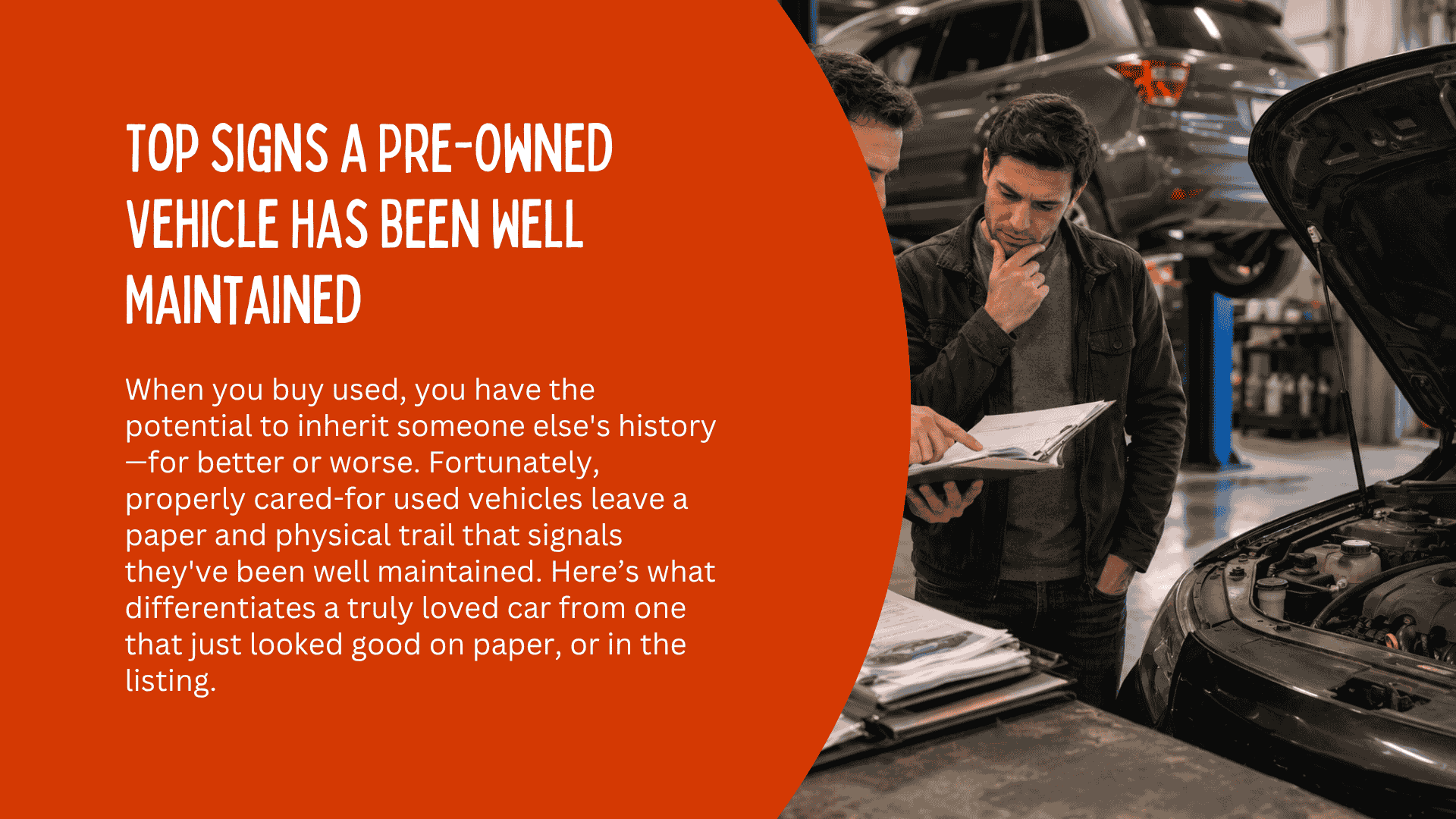
Top Signs a Pre-Owned Vehicle Has Been Well Maintained
Key Insights -The overall comprehensive maintenance record from a shop or single dealership would be preferable, showing evidence of proper car...
Read more
Work with your own bank or credit union to get a loan pre-approved, as that will give you an impressive bargaining chip against your auto dealership. If you need professional services, such as tools for managing your finances and customized digital services, consider our professional services. Additionally, avoid 'add-ons,' such as extended warranties, rustproofing, or additional paint protection that will drive up the loan's principal and your overall interest expense.
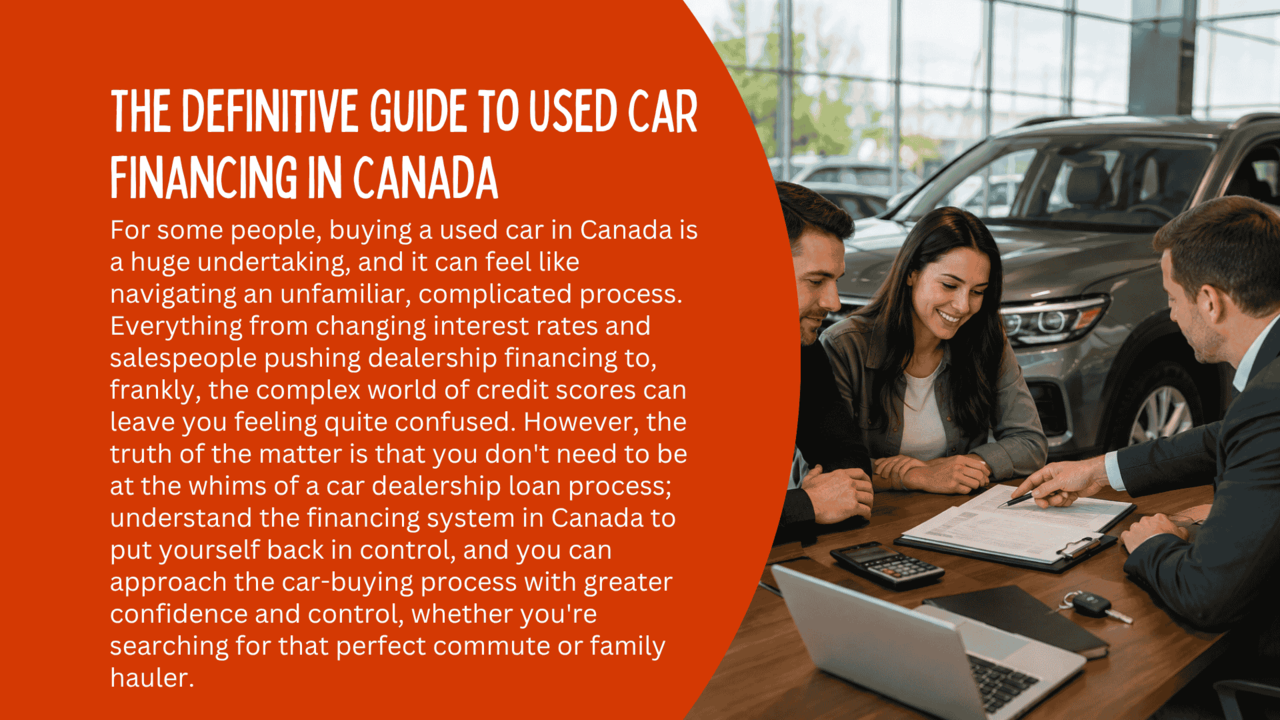
For some people, buying a used car in Canada is a huge undertaking, and it can feel like navigating an unfamiliar, complicated process. Everything from changing interest rates and salespeople pushing dealership financing to, frankly, the complex world of credit scores can leave you feeling quite confused. However, the truth of the matter is that you don't need to be at the whims of a car dealership loan process; understand the financing system in Canada to put yourself back in control, and you can approach the car-buying process with greater confidence and control, whether you're searching for that perfect commute or family hauler.
When talking about your auto loan being approved, your credit score represents your "ticket" to better interest rates in the Canadian market; what the bank sees in a credit score on an Equifax or TransUnion report is a snapshot of how you handle credit. If your score exceeds a "720" you will most likely be approved for an "A-paper" loan which is where you get interest rates from somewhere below two percent on your used car loan; However it is not essential to have an "A-paper loan", as quite a few people obtain "sub-prime" or alternative financing which has a higher percentage of interest as and can usually reach just short of seven percent depending on your interest rate that you obtain from a credit company; all of these loans depend on a very low debt-service ratio and if one is keeping their current monthly expenses with income well below their debt-service ratio you will quite likely obtain a loan with ease.
Essentially, your down payment is your primary policy against bad decision-making. Most times this percentage can range from ten to twenty percent of the purchase price which will lower the amount that one is borrowing, to clearly explain if you put twenty percent down on a twenty thousand dollar vehicle, that one only needs to borrow sixteen thousand and therefore only has a sixteen thousand dollar loan on a twenty thousand dollar car, of course this also means there will be a considerably smaller amount of interest that must be paid back as compared to someone borrowing all twenty thousand dollars. Secondly, an increased down payment, or at least ten percent, clearly shows the lender that you are a capable and credible candidate worthy of a low-interest loan. When borrowing money at say thirty thousand dollars or so for a larger, more expensive vehicle it is also recommended that at least ten percent is put down to prevent being upside down, or underwater, which iswhen an individual owes money than what the vehicle is currently worth and that typically results if there isn't a considerable interest to payments on the loan ratio that the vehicle is being bought for as and/or if the vehicles equity is dropping so much and more rapidly than what one may be borrowing.
Minimum credit score for an auto loan?
Generally speaking, you'll have no trouble getting conventional financing if you're in the mid-600s or higher, but technically, there is no legally set minimum score. Lower scores may require special bad-credit used-car loan programs, where interest rates are higher.
Does a down payment affect my interest rate?
Yes, it can lower the interest rate the lender offers. When you make a down payment, your Loan to Value ratio would also decrease; that is, the overall value that has to be lent to you would fall. The lower the risk to the lender, the better the loan options and interest rates. You have fewer ways to influence the bank to view you more favorably.
Can I refinance a used car loan?
Absolutely, as long as it's a beneficial step. Refinancing is best when your financial circumstances change or when interest rates are lower than those currently available in the market. Taking a loan to pay off an existing loan may seem beneficial, but be mindful of any potential prepayment penalties in the original loan contract. However, most open loan contracts in Canada usually don't include a premature repayment penalty.
What's a good monthly loan repayment range?
Ideally, your total monthly vehicle payment plus any associated costs like insurance or maintenance shouldn't exceed 15%-20% of your take-home pay. Let the salesperson indicate your affordability, as this will reflect the loan principal, interest, and total term. Make sure you have your personal budget first and secure a repayment duration that is comfortable for you.
Key loan contract considerations?
Carefully examine the contract length, the interest rate applied on the loan, and ensure it is a 'simple interest loan' rather than compound interest. Most contracts, also known as "open" loan contracts, are provided with no additional penalty; that means you can clear the outstanding balance much earlier than the completion of the whole payment. Conversely, you may not have the ability to make payments on account to discharge the debt fully without early termination fees or penalties where it's a "closed" loan contract.
Will my used car loan rates be subject to fluctuation?
The economy, specifically the Canadian Federal Bank's primary interest rate target, determines the fluctuation in interest rates, as these are driven by overall national economics. However, lending standards for the auto market may change as EV adoption increases and lenders try to address the residual value and long-term life of these vehicles. Hence, to make more informed investment decisions, staying updated on new economic trends is essential for all clients.
To thrive in the Canadian auto market requires some savvy rather than stumbling around unthinkingly, as treating your automobile acquisition like a formal financial transaction enables you to gain power by preventing lenders from having to persuade people like you to shell out excess interest fees throughout three to four years. Focusing on your budget will reduce the overall financing cost. Always, always confirm all points and details of your loan contract, and don't hesitate to walk away from a purchase if you are not fully confident.
Top Signs a Pre-Owned Vehicle Has Been Well Maintained
Key Insights -The overall comprehensive maintenance record from a shop or single dealership would be preferable, showing evidence of proper car...
Read more
How Trade-In Value Affects Your Next Pre-Owned Vehicle Purchaseac
How Trade-In Value Affects Your Next Pre-Owned Vehicle Purchaseac Trading in your current car is often the fastest way to lower the cost of your...
Read more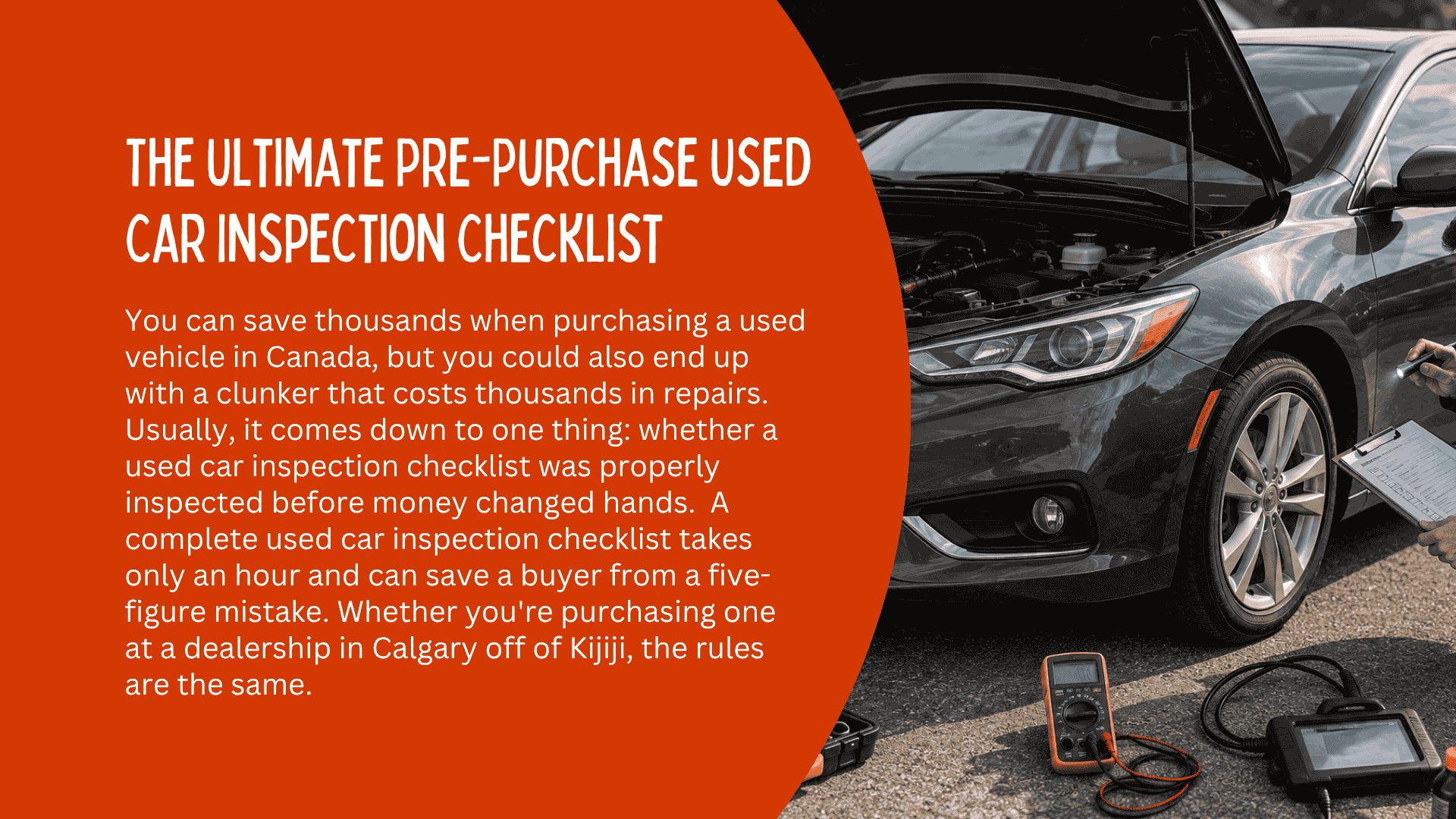
The Ultimate Pre-Purchase Used Car Inspection Checklist
Key Insights A basic engine inspection – including the color of the oil, looking for leaks, checking the belts, and listening for odd noises –...
Read morePowered and developed by
