
The Definitive Guide to Used Car Financing in Canada
Key Insights Work with your own bank or credit union to get a loan pre-approved, as that will give you an impressive bargaining chip against your...
Read more
-The overall comprehensive maintenance record from a shop or single dealership would be preferable, showing evidence of proper car care and service for its system during operation, etc.
-Proper timing in terms of how frequently oil is changed in a vehicle, and also proper procedures in oil changing, is the most beneficial way to manage engine wear and maintenance.
-Documented service to inspect brakes, replace brake fluid, etc. These are critical pieces that you do not have to get a technician involved; most owners are quite vigilant about performing this type of service at appropriate times throughout their ownership of a vehicle, especially in Canadian winters
-A simple check of how many miles are worn on each tire indicates any obvious misalignment and any sort of wear problems if the tires were rotated as expected, and if they were supposed to be snow tires, it has been noted accordingly.
-Vehicle history report together with an inspection; although both have benefits, they would make a good combination. A rust and undercarriage check should be completed with both.
-Complete records not only for basic things but transmission, cooling, and timing for total system performance and integrity for use in its continued life of usefulness.
-An independent used-car inspection should always be requested and agreed upon by the seller of the vehicle beforehand.
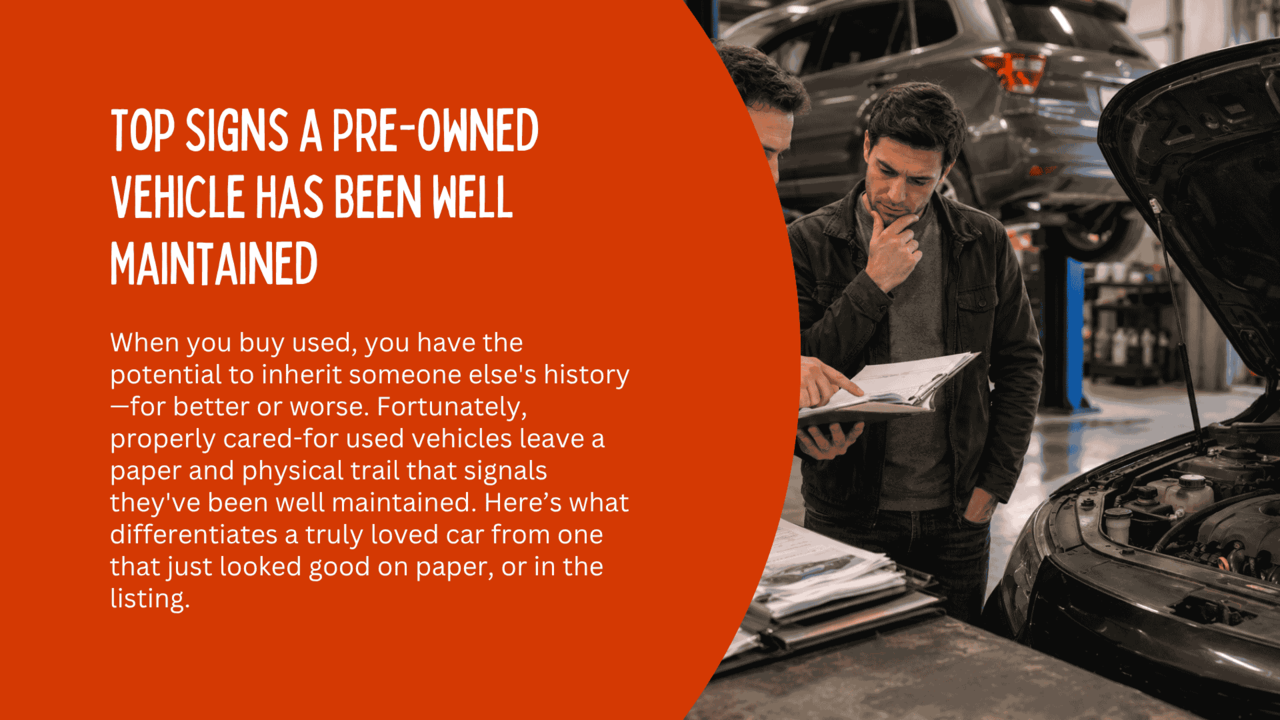
When you buy used, you have the potential to inherit someone else's history—for better or worse. Fortunately, properly cared-for used vehicles leave a paper and physical trail that signals they've been well maintained. Here’s what differentiates a truly loved car from one that just looked good on paper, or in the listing.
Someone willing to hand over a stack of receipts organized in a binder or digital folder is basically signing up to show you how diligently they loved their car; this wasn't an impulse purchase; this was an investment—maintenance intervals—every 8,000–12,000 kilometers, for example-tell you more than a pile of random invoices. Moreover, a vehicle mostly serviced by a single dealer or repair shop suggests the owner may have had a relationship with a trusted mechanic who caught small problems before they snowballed.
When you know what to look for, start your search with Certified Pre-Owned (CPO). These offer some level of inspection by a factory-trained mechanic, a warranty, and a more stringent vetting process than is typically found at independent dealers. Those dealerships still offer nicely cared-for vehicles, but the level of inspection varies greatly by dealer, so ask what their standard inspection includes. Online marketplaces, which host a large number of private-seller listings, increase the pool; you may even find a better-maintained car with more detailed personal maintenance records from the individual who owned it from new.
Oil changes show you the previous owner's engine maintenance. You'll want to examine the dates on the receipt to see the span between them: depending on your make, model, oil, and driving style-or how it was treated if the previous owner put it through severe duty-you should have oil changed every 8,000 to 16,000 kms. Skipped changes like this one month, that one the next could spell trouble in the long run.
Oil can also tell you a thing or two: test the dipstick; if it's dark and sludgy, it's neglected; if it's clear and properly filled, the oil is well cared for and was recently changed. Look for a service sticker on a windshield pillar or jamb; if you don't see one, check a receipt.
Examining a detailed, regular brake service history is like having your own personal detective's file on the car's last owner and their habits, helping prevent you from inheriting neglected, problem-ridden squeaking or grinding brakes. Brakes are undeniably one of the more safety-critical components of any car. If possible, ask for maintenance records outlining past replacements or resurfacing.
Tire wear is like a scorecard for your car's suspension and alignment. Balanced wear across all four tires suggests maintenance has generally been followed, with oil changes and rotations regularly scheduled and completed every 8,000-10,000 km. Any unevenly distributed wear-say, just the outer edge of all four- will point to a problem with the car’s wheel alignment that the previous owner either didn't do or perhaps was delayed due to the expense.
Take care to ensure that all four tires have generally uniform wear. Was there an even spacing between brake job service and tire rotation? Are the tires generally all in fairly even condition-based on replacement date and remaining tread life- unless, of course, all were bought recently or none were bought very recently. In particular, take note if you know that all four were only changed in part-if only two were changed in an attempt to cut costs. This usually suggests the last owner was cutting corners and would rather fix something than do it properly for future peace of mind.
The underside of the vehicle isn't as easy to inspect during your walk around, so it needs more attention. If it’s at all possible, hoist the vehicle or lie down beneath it using a long flashlight. Thoroughly inspect all floor pans, exhaust components, the wheel wells of each fender, and both frame rails for obvious rust. Some minor surface rust will appear on unpainted bare metal components, and will be of no concern for the life of the vehicle but you don't want to find bubbled or peeling paint, or rust eating its way through integral structural components on any vehicle in particularly snowbound parts of the country which are subject to so much road salt: this type of rust has a way of becoming extremely expensive and very important; watch out for suspension mounting points and fuel tank straps as this is generally considered to be the most expensive rust to fix and may represent a serious safety hazard; having a vehicle with outstanding maintenance records, but severe rust in this regard doesn't necessarily mean it hasn't been well maintained mechanically; quite the opposite however-in many regards it points to a vehicle having resided in areas during some or many parts of its life where extremely harsh winter seasons can and will quickly corrode exposed components; and all this needs to be taken in to account with the vehicles purchase offer.
Beyond oil changes and brakes, you’ll want to investigate when fluid changes were done, including transmission fluid where applicable, timing belts/chains, and battery replacements. Cars that have consistent preventative care across these "other" scheduled items often hold up considerably better long-term. Look at when a vehicle is due for major service milestones, such as 100,000 km or more for a timing belt replacement; this will likely be a costly repair or upkeep, and you may want to plan for that responsibility.
Does the interior wear and the condition of the paint job appear to align roughly with the mileage shown on the odometer? A worn-out vehicle with low mileage, or an almost new interior with high mileage, indicates you need to ask more questions.
Using your vehicle’s VIN, you can easily check the vehicle’s reported history you are interested in buying. VIN history reports often include details about reported accidents and odometer readings in addition to title status (i.e., if it was a clean or salvage title).
This gives you a timeline to compare with any records the seller provides, plus independent verification.
The more the VIN history, records, and story agree, the more comfort you will have buying a car. Look for problems such as discrepancies in odometer readings, a branded title, or multiple short-term ownership changes.
A vehicle with extensive service history (oil changes, brakes, etc.) may justify a higher asking price than one with no record or sporadic records of upkeep. This can reduce your need to negotiate on-site financing deals.
Even with oil change records, inspection reports, and solid sales history, it still pays to get a pre-purchase inspection done on your vehicle for approximately $100 to $200 CAD. This can determine whether any recent damage has occurred since the last recorded maintenance appointment, helping put any concerns to bed. A pre-purchase inspection can give you peace of mind by confirming what you are buying before you finalize everything.
Before you decide on purchasing the vehicle, quickly run through these points.
-Request comprehensive records and ensure they come from legitimate repair facilities that the dealer or seller can prove exist.
-Generate a VIN-based history report, and verify that what's shown on the report doesn't contradict what the seller or dealer indicates.
-Ask to see (or ask about) a complete oil change history and examine the condition of the oil itself if able.
-Verify that brake inspection records and brake fluid changes are in order; do a short but significant test drive and check the brakes over 1-2 strong stops.
-Note the extent of the wear on the vehicle's tires; inquiries can be made regarding rotation schedules and when or whether a second set of winter tires is used.
-Place the vehicle on a lift (or use a flashlight and get on your belly to inspect the undercarriage for any evidence of severe rust).
-Determine if the car's asking price is commensurate with market value by doing comparable searches against that vehicle in other similar local ads.
-Have pre-approved financing before signing anything if you aren't paying cash upfront for the vehicle.
-Have the vehicle inspected by an independent shop of your choosing before purchasing the vehicle.
What's the difference between a vehicle history report and a maintenance history for my car?
A maintenance record will tell you what service your car had (i.e., a transmission or coolant flush) and when, while a report would tell you things such as what kind of service was performed and at what mileage (i.e., a coolant flush completed at 120k miles). Your vehicle’s maintenance history, along with the vehicle report, can be more useful than individual components alone.
Is it possible for there to be certain repairs or mechanical issues you wouldn’t know about with full service records?
Yes. Sometimes, a major problem can arise shortly after it’s last serviced, meaning it hasn’t been reported/recorded as repaired until it begins to fail. Records don't replace an actual inspection of a used car.
How much wear and tear can I accept from my used car?
Some minor cosmetic damage from general use isn't a real problem, as it reflects normal ownership over a car's lifespan. Flaky or bubbling metal, however, indicates a risk of rust/wear; you need to consider whether this risk is factored into the purchase price for it to be reasonable.
Buying the right used car is not dependent on good fortune. Still, more on how to analyze what's important regarding details, and if you take that little extra effort and time to look, then those aspects should stand out readily to you, so it stands that what are generally things that matter like full service records, oil changes, inspection overhauls, etc. Coupled with knowing the car's history and having verified proof through a vehicle report and an inspection from an independent car inspector, you will have more confidence that you'll get a much more reliable car.
The Definitive Guide to Used Car Financing in Canada
Key Insights Work with your own bank or credit union to get a loan pre-approved, as that will give you an impressive bargaining chip against your...
Read more
How Trade-In Value Affects Your Next Pre-Owned Vehicle Purchaseac
How Trade-In Value Affects Your Next Pre-Owned Vehicle Purchaseac Trading in your current car is often the fastest way to lower the cost of your...
Read more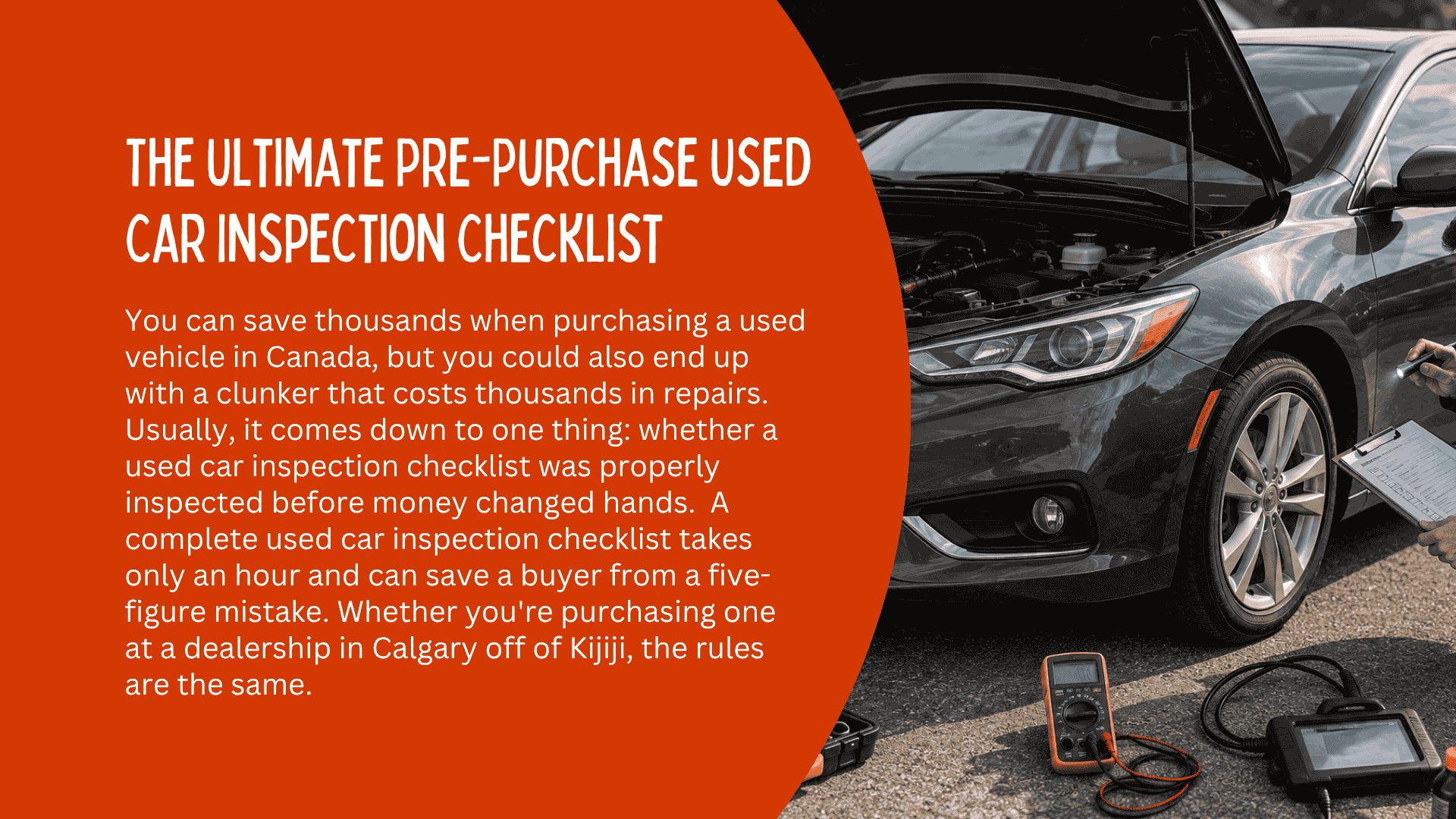
The Ultimate Pre-Purchase Used Car Inspection Checklist
Key Insights A basic engine inspection – including the color of the oil, looking for leaks, checking the belts, and listening for odd noises –...
Read morePowered and developed by
