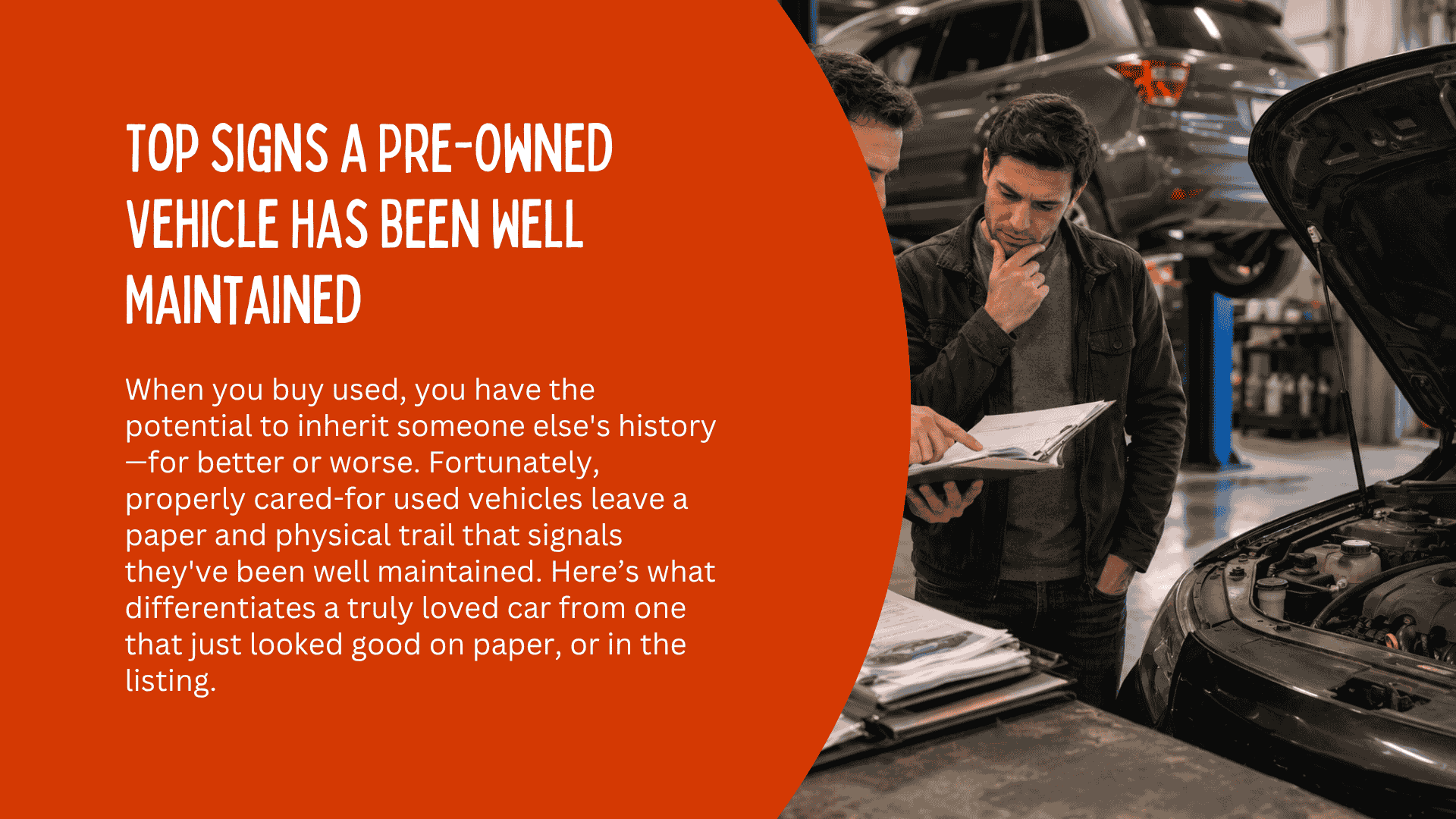
Top Signs a Pre-Owned Vehicle Has Been Well Maintained
Key Insights -The overall comprehensive maintenance record from a shop or single dealership would be preferable, showing evidence of proper car...
Read more

Trading in your current car is often the fastest way to lower the cost of your next pre-owned vehicle. But the number a dealer offers isn't just a formality — it directly shapes your budget, your financing terms, and which vehicles realistically fit your budget. Understanding how trade-in value works, and how to get the most out of it, can put thousands of dollars back in your pocket before negotiations on your next purchase even begin.
Trade-in value is the amount a dealership offers for your current vehicle as a credit toward the purchase of another one. It's different from resale value, which is what your car could fetch if you sold it privately, and it is also different from the price you originally paid. Dealers calculate trade-in value based on a mix of factors: your vehicle's age, mileage, condition, accident history, market demand, and how easily that specific make and model sells in your region. In Canada, seasonal demand plays a bigger role than many drivers expect — a well-maintained AWD SUV will often command a stronger trade-in value in October than it would in June, simply because dealers know winter-ready vehicles move faster once the snow starts.
Read More: Value your Trade
Many buyers treat their trade-in as an afterthought — something to sort out after they've already picked the next car. That's backward. Trade-in value affects the deal in several concrete ways:
Every dealership follows a similar process for figuring out trade-in value, even if the exact tools differ from one lot to the next. The appraiser cross-references your vehicle against current market data — auction prices for similar vehicles, how many units like yours are already sitting on the dealer's lot, and what demand looks like in your specific region.
If you want to maximize what you're offered, a few practical steps make a real difference before you ever set foot on a dealership lot.
A clean interior and a freshly washed, waxed exterior create a stronger first impression during appraisal — and appraisers do factor cosmetic condition into their offer.
Investing in a $2,000 paint job for a car worth $8,000 usually isn't worthwhile — you won't recoup the cost.
Service records, the owner's manual, both sets of keys, and any warranty documentation all support a higher appraisal. Missing documentation makes appraisers assume the worst.
Trading in a convertible in spring or a truck before winter plays to seasonal demand and can boost your offer.
Visiting two or three dealerships — or getting a written offer from one and using it as a benchmark elsewhere — puts real numbers on the table instead of guesses.
It's worth separating these two terms clearly, because confusing them leads to disappointment at the negotiating table.
Some owners choose to sell privately to capture the higher resale value, then use that cash toward their next vehicle. For many Canadian buyers, the simplicity of a dealership trade-in is worth the dollar difference.
Where you trade in can change both the offer and the experience:
If you're eyeing a used car upgrade — moving from an older compact to a newer crossover, or from a base trim to something with more features — your trade-in is often the single biggest lever you control in that transaction. That leaves $6,000 in equity to apply toward your next purchase. This is also where a dealership trade-in can outperform a private sale in one specific scenario: timing.
Bring written comparison quotes from at least one other dealership or online vehicle-buying service. Negotiate the trade-in value and the new vehicle price as separate conversations — dealers sometimes bundle them to obscure where the real savings (or losses) are happening.
Top Signs a Pre-Owned Vehicle Has Been Well Maintained
Key Insights -The overall comprehensive maintenance record from a shop or single dealership would be preferable, showing evidence of proper car...
Read more
The Definitive Guide to Used Car Financing in Canada
Key Insights Work with your own bank or credit union to get a loan pre-approved, as that will give you an impressive bargaining chip against your...
Read more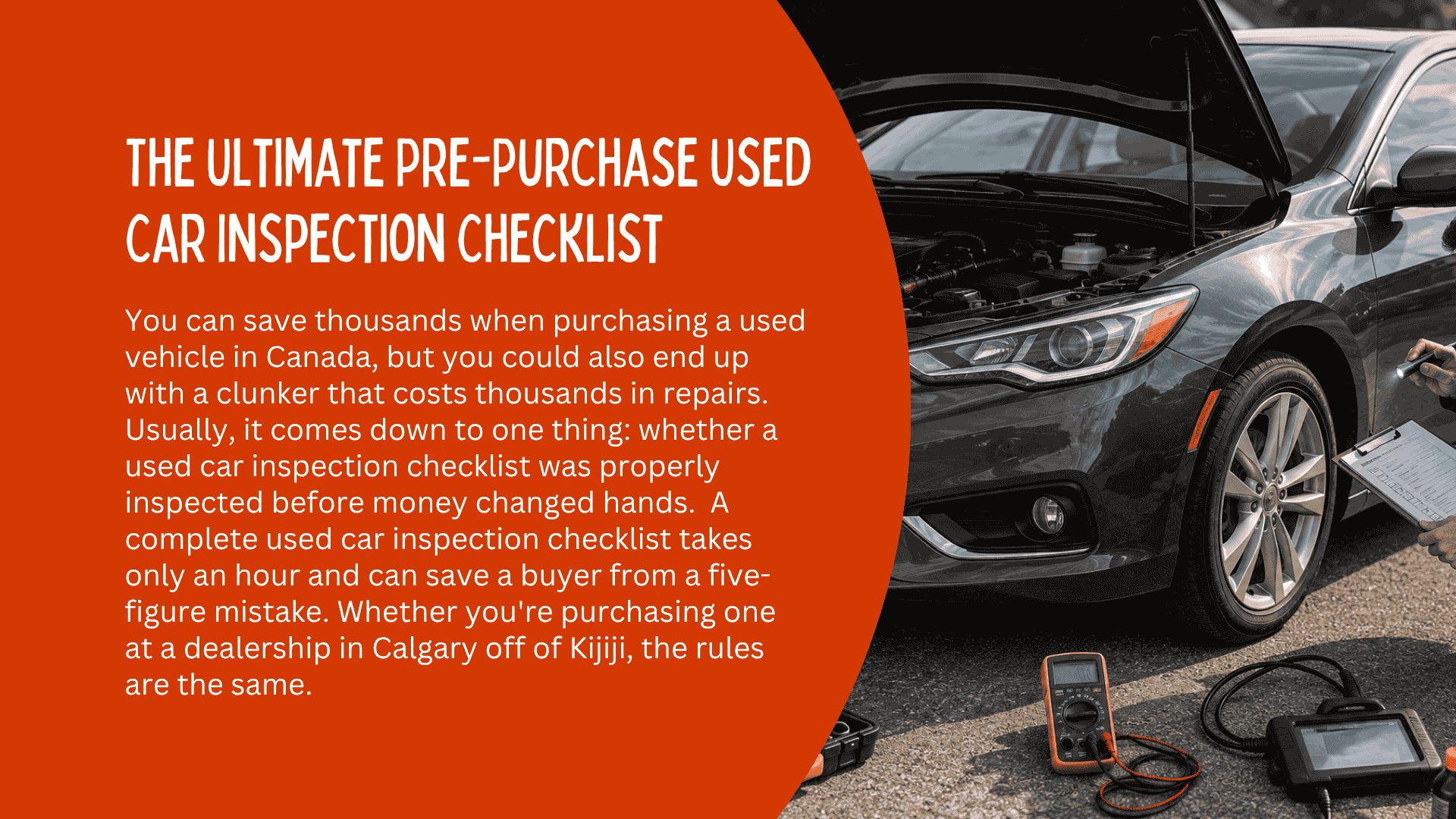
The Ultimate Pre-Purchase Used Car Inspection Checklist
Key Insights A basic engine inspection – including the color of the oil, looking for leaks, checking the belts, and listening for odd noises –...
Read morePowered and developed by
